


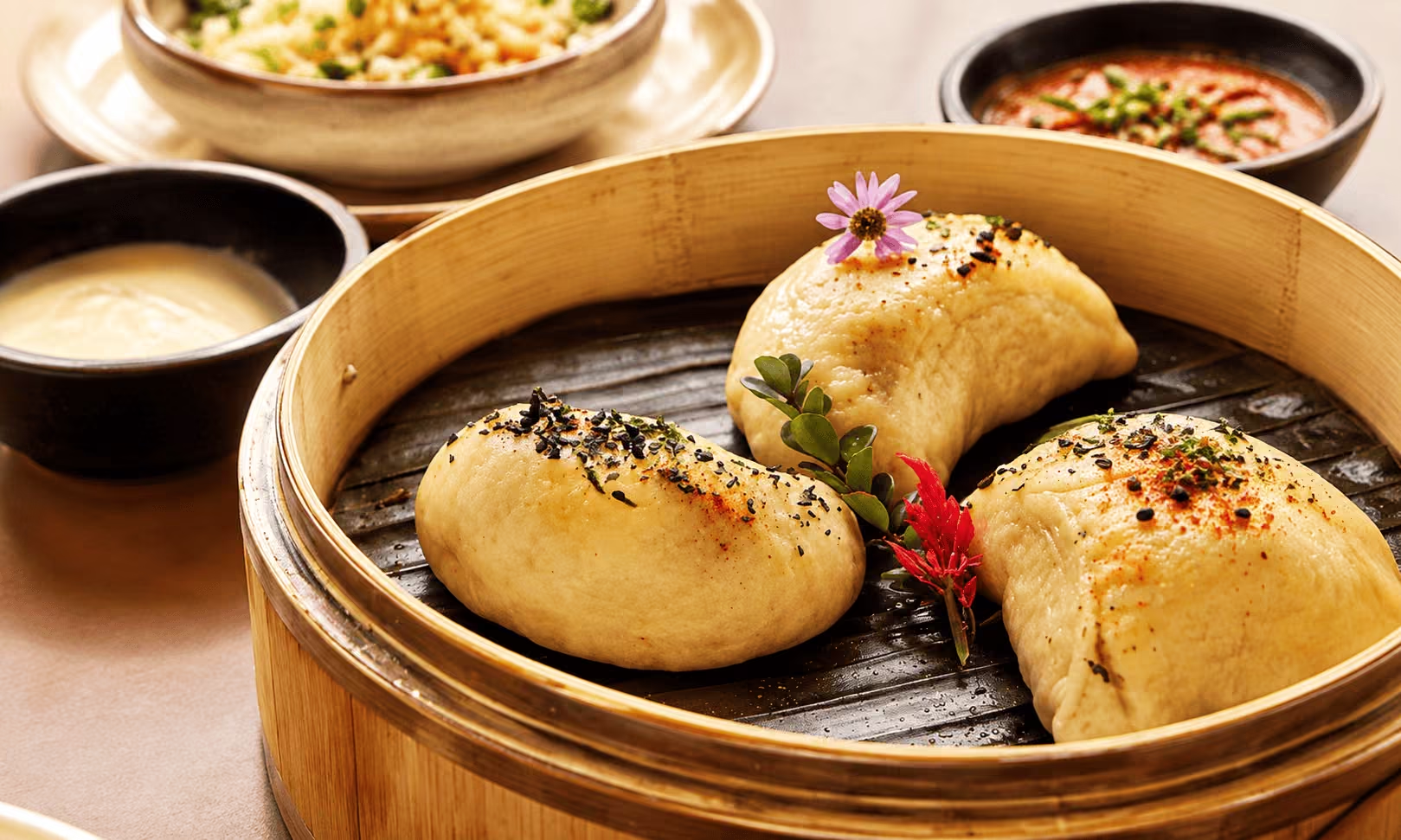
What makes a basic steamed bread so special that it’s a staple in Himachal Pradesh's food culture?
Sidu bread is more than a traditional Himachali dish. Made with fermented wheat dough, filled in different ways and steamed until soft, it reflects the ingredients, cooking methods and family traditions of the mountains. For generations, variations of Sidu have been enjoyed across parts of Himachal Pradesh, especially around Kullu, Mandi, Shimla, Manali and Rohru.
While recipes vary from one household to another, the idea remains much the same: prepare the dough, let it ferment, add a flavourful filling, steam it and serve it hot. Understanding that process also offers a glimpse into the food culture of the region and the way everyday dishes become part of local identity.
What Is Sidu Bread?
Sidu bread is a traditional Himachali steamed bread made from wheat-flour dough that is left to ferment before being shaped, filled and steamed. It is commonly served hot with accompaniments such as ghee, dal or chutney. Unlike a baked loaf, steaming provides its soft texture.
The dish is also written as Siddu or Sidhu, so travellers and foodies may come across all three spellings while researching Himachali cuisine. The fillings can also vary. Some versions use urad dal, while others include walnuts, poppy seeds, peas, herbs, spices or sweet ingredients.
Sidu, Siddu or Sidhu: Are They the Same?
In most food and travel contexts, Sidu, Siddu and Sidhu refer to the same traditional Himachali dish. The difference is mainly in spelling across languages.
This is useful to know when searching for the dish because a recipe labelled “Siddu” can describe the same type of steamed bread that another source calls “Sidu.” What matters more is the preparation and regional variation than the spelling itself.
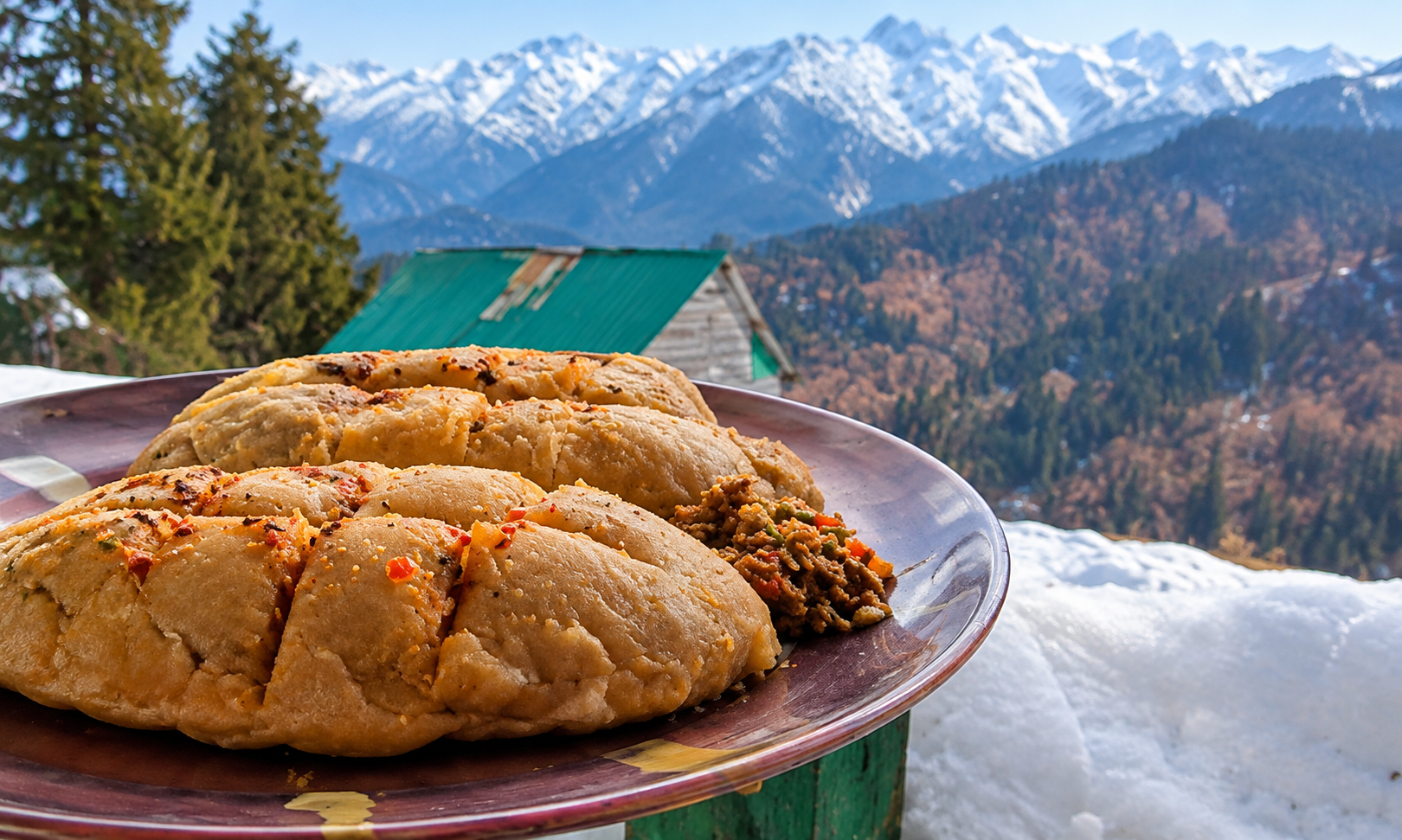
Why Did Sidu Become a Mountain Staple?
Sidu's place in Himachali food culture is closely connected to the practical side of mountain cooking. The dish uses wheat flour as its base, while the filling can be adjusted to ingredients available at home. The dough also needs time to ferment, making Sidu a food item involving preparation and patience rather than something made in a hurry.
The cooking method is equally distinctive. Instead of being baked, the filled dough is steamed, creating the soft, hearty texture that defines Sidu. It is then often served with ghee, dal or chutney, turning the bread into part of a filling meal.
Sidu is particularly associated with colder months, when soulful traditional foods naturally become more prominent in household meals. However, it is better to think of Sidu as a dish with a strong winter and mountain-food association, rather than one that is eaten only in winter.
A Food Shaped by Mountain Ingredients
One of the most interesting aspects of Sidu is the flexibility of its filling. Traditional preparations can include ingredients such as urad dal, walnuts, poppy seeds, green peas, herbs and spices. These ingredients can be combined differently depending on the household and region.
What makes Sidu a family staple is its flexibility rather than a rigid recipe. Two families can prepare the dish using different fillings and still consider their versions part of the same food tradition.
The use of locally familiar ingredients also gives Sidu a strong connection to Pahadi food culture. Instead of depending on elaborate techniques or rare ingredients,a relatively simple wheat dough is created into something special through fermentation, stuffing and steaming.
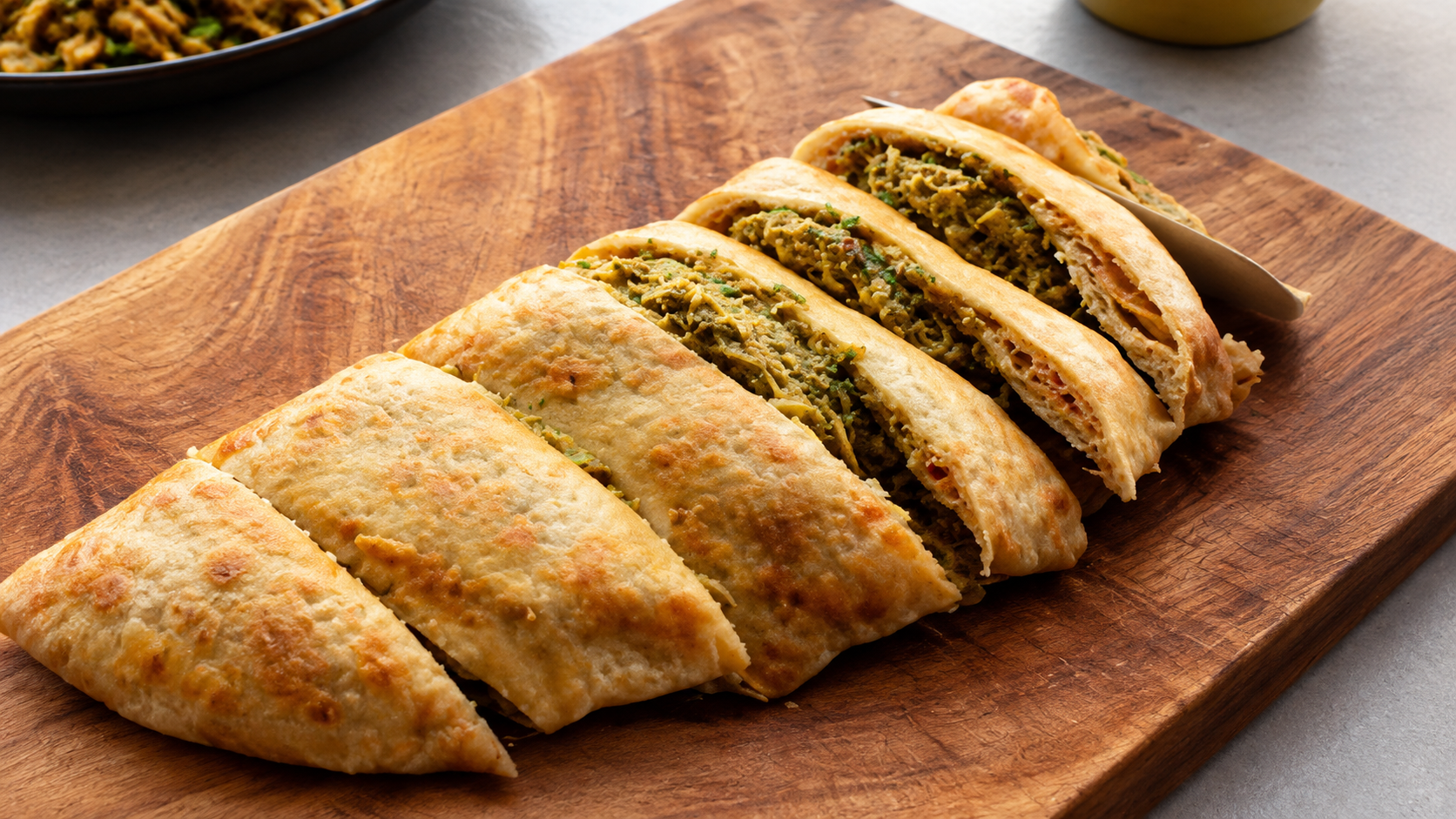
How Families Traditionally Make Sidu
Although every household may have its own method, the basic preparation follows simple steps: ferment the dough, prepare the filling, stuff and shape the dough, and steam it.
1. Preparing and Fermenting the Dough
Sidu begins with wheat flour, water and a raising agent such as yeast. The dough is kneaded and then left to rest so that it can rise and develop its characteristic texture.
This fermentation stage is one of the details that sets Sidu apart from many everyday Indian flatbreads. The dough is not simply rolled out and cooked immediately. It needs time before it is ready to be filled and steamed.
The exact resting period can vary based on the recipe, ingredients and conditions, so there is no need to treat one specific fermentation time as the universal traditional method.
2. Preparing the Filling
The filling is where you can see the family and regional preferences .
Savoury versions can include urad dal, green peas, herbs, ginger, garlic, green chilli and spices. Other preparations have walnuts or poppy seeds, while sweeter versions may use jaggery or other ingredients.
Some modern household recipes may also add ingredients that were not part of older preparations. That does not necessarily make them less meaningful. Like many traditional foods, Sidu evolves too as it moves between generations and kitchens.
3. Shaping and Stuffing the Sidu
Once the dough has risen and the filling is ready, portions of dough are shaped and filled. The filling is enclosed inside the dough before each piece is prepared for steaming.
This is where Sidu becomes distinctly different from an ordinary loaf or flatbread. Instead of spreading the flavour across the surface, the dish creates a soft outer layer around a concentrated filling.
4. Steaming Instead of Baking
The filled dough is steamed until it becomes soft and cooked through. Steaming gives Sidu its soft, pillowy texture and is one of the key features of the dish.
The result is a bread that feels hearty without having the crisp crust usually baked breads have. Once ready, it is usually eaten hot, often with a generous quantity of ghee, dal or chutney.
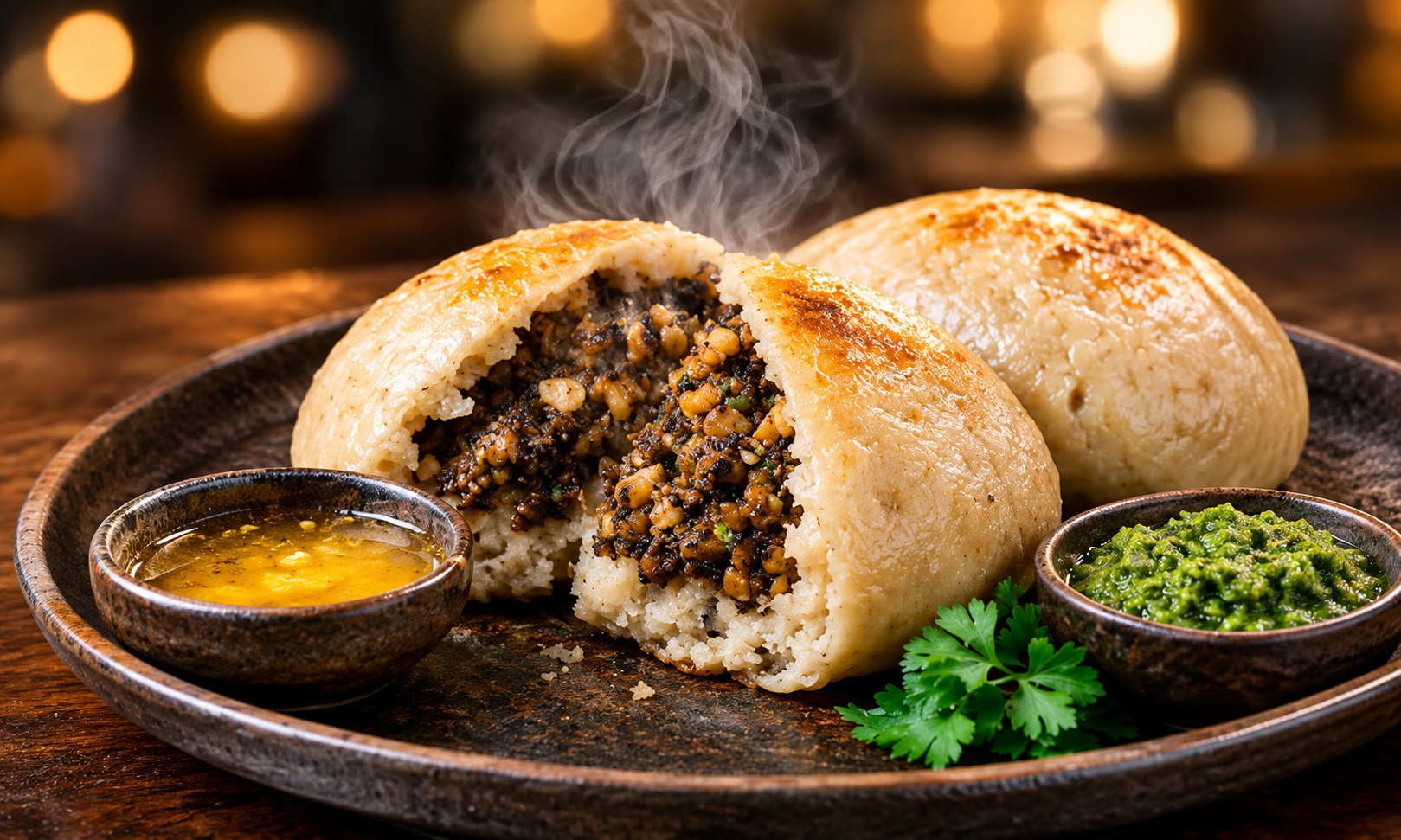
What Goes Inside Sidu? Regional and Family Variations
There is no single filling that is used in every Sidu preparation. The ingredients can change according to family traditions, local availability and whether the dish is being prepared as a savoury or sweet version.
Savoury Sidu Fillings
Urad dal is one of the common savoury fillings. Green peas, herbs, chilli, ginger, garlic and spices can also be used to create a more fragrant mixture.
These fillings give the mild dough a stronger flavour and make Sidu a good part of a larger meal.
Walnut, Poppy Seed and Sweet Variations
Walnuts and poppy seeds are also found in different Sidu preparations, while sweet versions can use jaggery and other ingredients.
The important point is that Sidu recipes vary. Rather than looking for a fixed filling, it is better to see these variations as part of the dish's regional and family traditions.
How Sidu Is Served in Himachali Homes
Sidu is generally served hot, with its accompaniments adding richness and contrasting flavours to the soft steamed bread. Ghee is a classic pairing, while dal and chutneys can add savoury, spicy or fresh flavours.
In the Kullu-Manali region, for example, Sidu may be served with clarified butter and a lentil-based accompaniment. Other households can have their own preferred combination.
Why Ghee Is Such a Natural Pairing
Ghee works well with Sidu because its richness complements the relatively mild wheat dough. It can be poured over the hot bread or served alongside it, depending on the preparation.
Rather than seeing ghee just as an add-on, it is part of the traditional way of serving it that makes a plate of freshly steamed Sidu feel complete.
When Do Families Usually Make Sidu?
Sidu has a strong link with winter meals in Himachal Pradesh. Its hearty nature, warm serving style and substantial fillings make it a natural fit for colder weather.
But its role is not just seasonal. Traditional foods often become meaningful through repetition: a family prepares a dish, younger members learn the process, and small variations become associated with particular homes.
Sidu can also appear when guests are being welcomed or when people want to prepare something more filling than an everyday quick meal. The time required for fermentation and steaming makes it feel more deliberate than many routine breads.
From Family Kitchens to Himachal's Food Trails
Today, travellers can find Sidu outside family kitchens as well. It appears on local menus, at traditional eateries and in food experiences across parts of Himachal Pradesh.
For visitors exploring Kullu, Manali, Mandi or Shimla, trying a local dish such as Sidu can add another layer to the journey. It offers an opportunity to experience Himachal through its food, not just through its landscapes.
Why Sidu Is More Than Just a Traditional Recipe
Sidu tells a larger story about how food develops around a place.
Its ingredients reflect what households use. Its preparation requires time. Its fillings vary from one family to another. Its serving style connects it with ghee, dal and chutneys. Most importantly, the recipe is passed through kitchens and shared meals rather than existing only as a written formula.
That makes Sidu an important part of Himachali food culture. For travellers, learning about it before visiting the region can also change the way they experience local food. A steamed bread on a plate becomes more meaningful when you understand the preparation, ingredients and family traditions behind it.
.png)
Where Can Travellers Experience Traditional Sidu in Himachal Pradesh?
Travellers can look for Sidu in parts of Himachal Pradesh where Himachali cuisine is commonly served, particularly around Kullu, Manali, Mandi and Shimla.
It may be available at local eateries, dhaba-style restaurants, traditional food places and hotels that include regional dishes on their menus. Availability and preparation can vary, so asking about the filling is helpful.
What to Look For When Ordering Sidu
If you are trying Sidu for the first time, ask what filling is being served and what accompanies it. You may find a savoury dal-based version in one place and a nut- or seed-filled preparation somewhere else.
Try it while it is hot and be open to regional differences. The fact that two plates of Sidu do not taste exactly alike is part of the experience.
If a Himachal trip is on your plans, choosing a stay that gives you a comfortable place to stay for exploring the region can make it easier to discover these local experiences along the way.
Frequently Asked Questions About Sidu Bread
1.What is Sidu bread?
Sidu bread is a traditional Himachali steamed bread made with fermented wheat dough. It is usually stuffed with savoury or sweet fillings and served hot, often with ghee, dal or chutney. It is particularly associated with parts of Himachal Pradesh such as Kullu, Mandi and Shimla.
2.Is Sidu the same as Siddu or Sidhu?
Yes. Sidu, Siddu and Sidhu are commonly used spellings for the same Himachali dish. The spelling can vary depending on transliteration, region and source, so travellers may see all three versions when researching local food.
3.Why is Sidu popular in Himachal Pradesh?
Sidu is closely connected with Himachali food traditions because it combines wheat dough, fermentation, local fillings and steaming. Its strong association with winter meals and family preparation has helped make it a recognisable part of Pahari cuisine.
4.What is Sidu usually filled with?
Sidu can contain several different fillings. Commonly associated ingredients include urad dal, green peas, walnuts, poppy seeds, herbs and spices. Sweet preparations may also use jaggery. The exact filling varies between households and regions.
5.Where can travellers try Sidu in Himachal Pradesh?
Travellers may find traditional Sidu in destinations such as Kullu, Manali, Mandi and Shimla, including local eateries and establishments serving Himachali cuisine. Asking about the filling and accompaniments can help you understand the particular regional or household-style preparation being offered.
Sidu Bread: A Taste of Himachal's Food Culture
Sidu bread is a reminder that some of the most memorable parts of a journey can begin with a simple local dish. Its fermented dough, varied fillings and steaming method are closely tied to the food traditions of Himachal Pradesh, while the differences between family recipes give the dish its character.
For travellers, trying Sidu is more than checking another item off a food list. It is a chance to experience a small part of Himachal's culture, one warm, handmade dish at a time. And when that experience is paired with a thoughtfully chosen stay, the food, landscape and hospitality can become part of the same travel memory.
Experience Garhwali Food on Your Next Mountain Stay
A Garhwali thali is best experienced slowly, with the flavours of the mountains and the stories behind each dish. Whether you're planning a peaceful getaway or exploring the region's local food traditions, a comfortable stay can make the experience even more memorable.
Plan your mountain escape with a stay at Golden Rock or Kanishka, and make local food, culture and hospitality part of your journey.
