


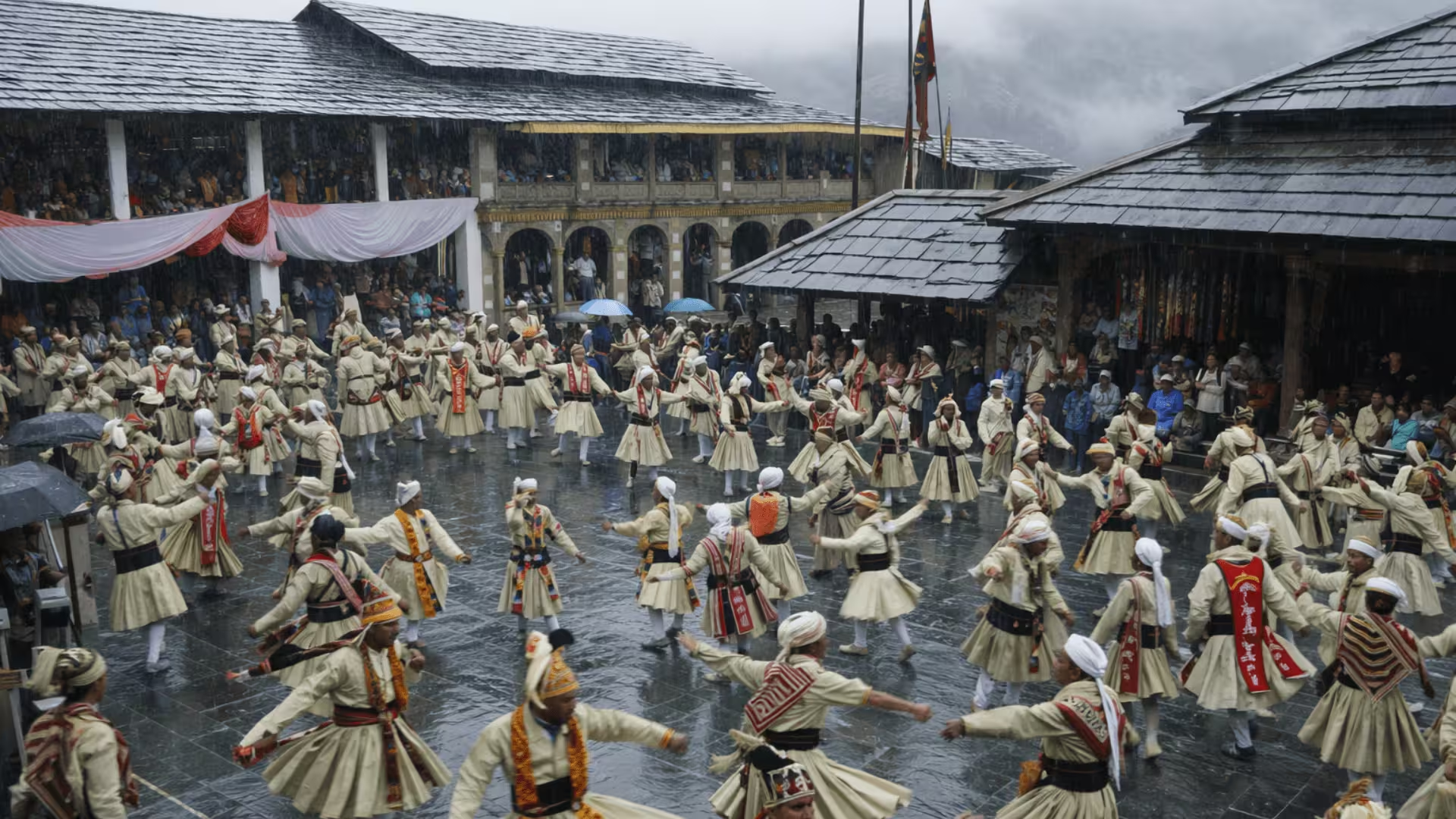
Across many remote villages of Himachal Pradesh, the steady sound of ankle bells still echoes through temple courtyards during festivals. These bells, known locally as jhanjhar, mark the beginning of a traditional dance that has been performed in mountain villages for generations.
Among the many rural Himachal cultural rituals, the Jhanjhar dance stands out as an active expression of faith, celebration, and community bonding. While modern travel often focuses on scenic landscapes and popular tourist towns, many of the most important cultural traditions of the Himalayas still continue within village life.
For travelers and culture lovers, finding traditions like the Jhanjhar dance in Himachal villages offers a better understanding of Himalayan culture. These dances are not staged performances but real celebrations where music, devotion, and community participation come together.
Experience the cultural soul of Himachal Pradesh while exploring its traditional villages, local rituals, and timeless mountain heritage. Stay at Kanishka, Manali – AM Hotel Kollection and enjoy a peaceful Himalayan retreat connected to the authentic spirit of the region.
What Is the Jhanjhar Dance Ritual?
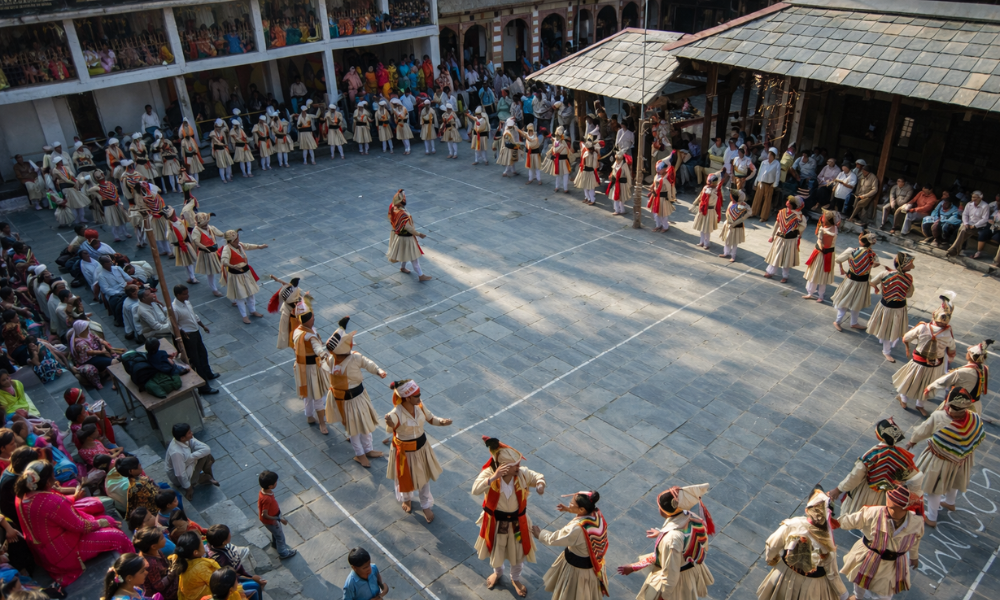
The Jhanjhar dance is a traditional folk dance performed in rural Himachal Pradesh during temple festivals and village celebrations. The word jhanjhar refers to the ankle bells worn by dancers, whose rhythm matches their movements and the beat of local instruments.
In Himachal’s traditional dances, ankle bells play an important role. Like ghungroos in classical dance, they add rhythm and sound as dancers move in coordinated steps. In the Jhanjhar dance, the bells serve as both a musical element and a cultural symbol of participation in the ritual.
This dance is part of a larger tradition of ghungroo-based folk dances across India. In Himachali villages, it often holds ceremonial significance, performed during temple gatherings, religious events, or seasonal celebrations.
The ritual blends folk music, dance, rhythmic movements, local instruments, and community participation. As the music rises, the jhanjhar bells fill the air, reflecting the spirit of rural Himalayan celebrations.
The Cultural Significance of Jhanjhar Dance in Himachal Villages
For many Himalayan communities, the Jhanjhar dance is more than entertainment. It is part of Himachali cultural heritage that shapes village identity and preserves traditional ways. These performances reflect the values and beliefs central to village life.
During festivals and temple celebrations, the dance brings the entire village together. Elders, musicians, dancers, and spectators all take part in a shared cultural experience. This collective celebration strengthens community bonds and links ritual to daily life.
The dance also tells stories through movement. Its steps, music, and formations convey local legends, seasonal changes, or religious meanings. Through these performances, communities pass cultural traditions from one generation to the next.
Over time, these practices help preserve Himachal folk culture. Even as lifestyles evolve, the Jhanjhar dance reminds villagers of their shared history and heritage.
When and Where Jhanjhar Dance Rituals Are Still Practiced
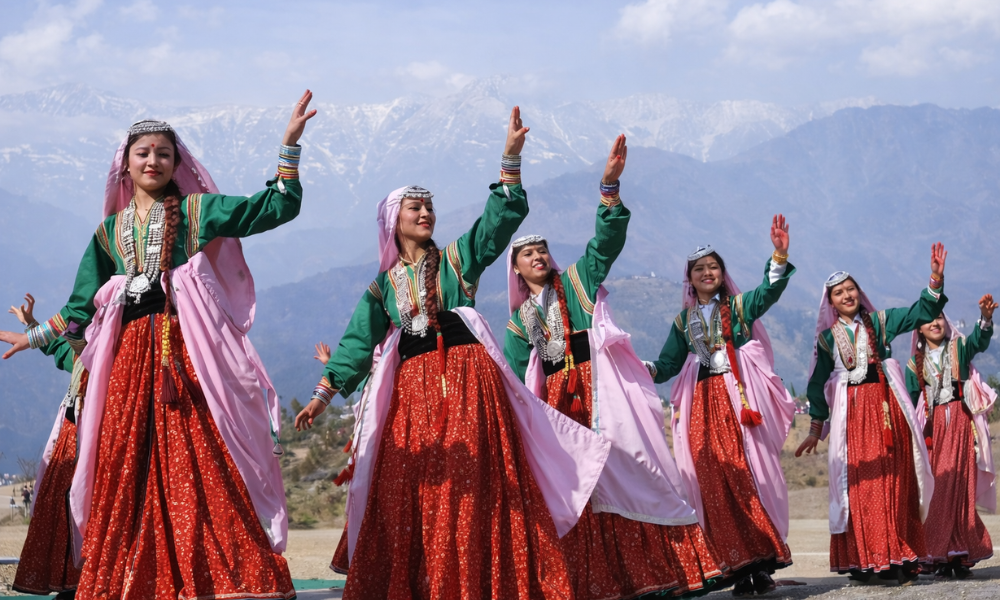
The Jhanjhar dance is still practiced in many small and traditional villages across Himachal Pradesh. These communities maintain strong cultural roots and continue to host temple festival dances during religious celebrations.
The ritual often takes place during annual temple fairs or seasonal events. These gatherings include music, food, prayers, and performances that explain Himachali village dance traditions. The dance is central to the celebration, marking both devotion and community joy.
These ritual dances follow the religious calendar. Festivals honor local deities, agricultural cycles, or seasonal changes. They give villagers a chance to perform cultural practices passed down through generations.
The dance also appears at village fairs and other traditional celebrations. In these moments, it reflects the spirit of rural Himachali life, where music and movement unite the community.
How the Jhanjhar Dance Ritual Is Performed
Understanding the Jhanjhar dance in rural Himachal Pradesh shows why it is so meaningful to local communities. The ritual starts with festival preparations, as musicians set up their instruments and dancers tie the jhanjhar bells around their ankles.
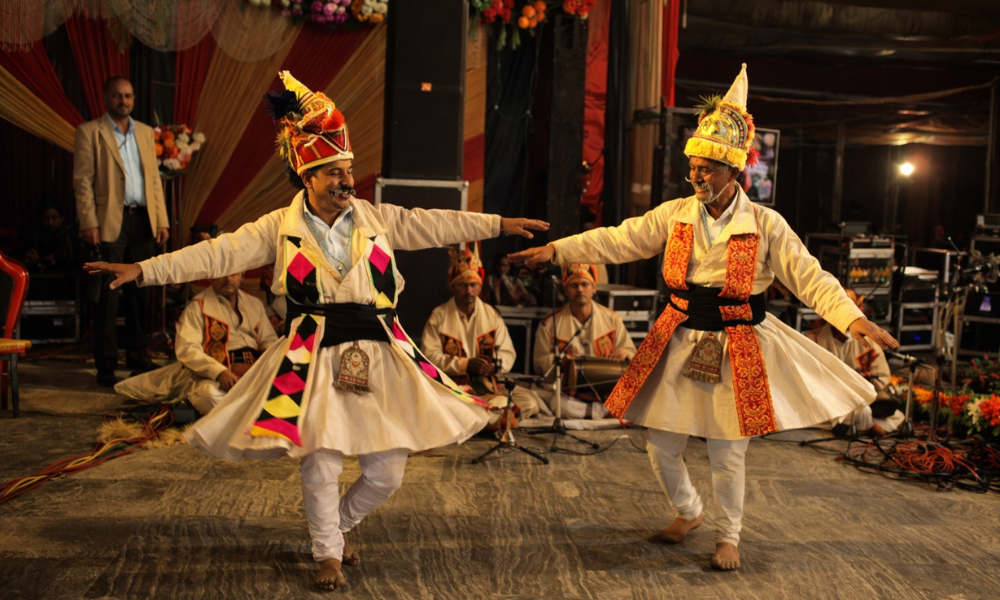
When the music begins, dancers form circular or semi-circular patterns. Their steps are rhythmic and synchronized, letting the bells create a steady musical pattern. The focus is on participation and coordination, reflecting Himachal’s broader community dance traditions rather than individual performance.
As the dance continues, the music may gradually speed up. Drummers and percussionists guide the rhythm, and dancers respond with coordinated footwork and movements. Together, the music and dance create an energetic performance rooted in Himachal Pradesh’s folk traditions.
Traditional Instruments and Costumes
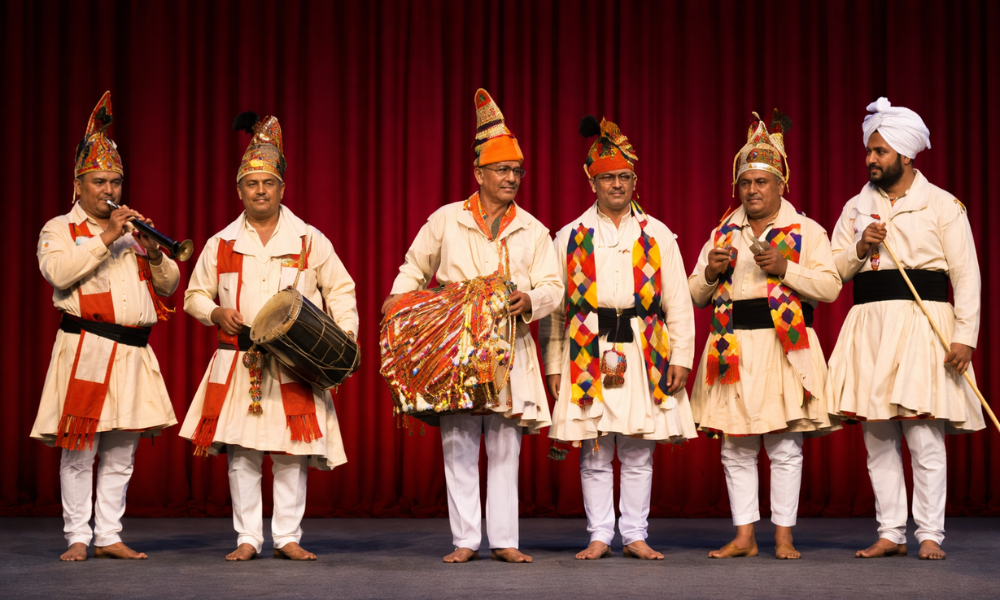
A key feature of the ritual is the ankle bells, or jhanjhar. These small metal bells are tied around the dancers’ ankles and create a rhythmic sound with every movement. They are an essential part of many Himachali dance performances.
Musicians also use traditional percussion instruments, including drums and other folk rhythm tools. These instruments help maintain the rhythm that guides the dancers.
Costumes reflect the village’s cultural setting. Dancers often wear traditional attire that represents regional styles, adding visual richness to the performance.
Role of Community Participation
The Jhanjhar dance ritual thrives because of the strong community participation in Himalayan rituals. Unlike stage performances designed for audiences, these dances are collective celebrations where villagers actively take part.
Men and women from the village may join the dance, while others support the event by playing music, organizing the gathering, or participating in related ceremonies. This shared involvement highlights the importance of community participation in village rituals.
Such participation also reinforces social bonds within the village. The dance becomes a symbol of unity and shared identity, strengthening the cultural fabric of the community.
Why Jhanjhar Dance Rituals Continue to Survive in Rural Himachal
Despite changing lifestyles and modern influences, the Jhanjhar dance continues to thrive because of the strong cultural foundations in Himalayan villages. These communities show how traditions can survive in mountain regions.
Temple festivals and village gatherings play a key role. They provide regular opportunities for communities to perform rituals and keep cultural practices alive. The dance helps preserve Himachal Pradesh’s folk heritage.
Knowledge is also passed down across generations. Elders teach younger villagers the steps, rhythms, and meanings of the dance. This ensures the ritual remains a living cultural tradition in the Himalayas.
Experiencing Himachal’s Living Cultural Traditions as a Traveler
For travelers interested in culture, visiting Himachal Pradesh gives opportunities to experience traditions that stay closely connected with local life. Beyond famous destinations and landscapes, the region’s villages provide some of the most authentic village experiences.
Seeing rituals such as the Jhanjhar dance allows visitors to see the richness of Himalayan village cultural traditions. These moments offer insight into how communities celebrate, preserve their heritage, and express their identity through music and dance.
Travelers exploring Himachal often find that its most memorable experiences come from discovering hidden cultural traditions rather than simply visiting tourist landmarks. Observing village festivals or cultural gatherings can create truly meaningful travel in Himachal Pradesh, where culture and landscape come together.
FAQs
What Is the Jhanjhar Dance Ritual in Himachal Pradesh?
The Jhanjhar dance ritual is a traditional folk dance practiced in rural villages of Himachal Pradesh. Dancers wear ankle bells called jhanjhar and perform rhythmic movements during temple festivals and community celebrations.
Why Is Jhanjhar Dance Still Practiced in Rural Villages?
The dance continues because village communities actively preserve their cultural traditions. Temple festivals, community gatherings, and generational teaching help maintain this ritual as part of everyday cultural life.
During Which Festivals Is Jhanjhar Dance Performed?
Jhanjhar dance is typically performed during temple festivals, seasonal village fairs, and religious celebrations. These events bring the community together to celebrate traditions through music and dance.
What Instruments Are Used in Jhanjhar Dance?
The main element is the jhanjhar ankle bells worn by dancers. Traditional percussion instruments such as drums are also used to provide rhythm and guide the movements of the performers.
How Do Folk Dance Rituals Preserve Himalayan Culture?
Folk dances help pass traditions, stories, and cultural values from one generation to another. In rural Himalayan communities, rituals like the Jhanjhar dance strengthen community identity and keep cultural heritage alive.
Conclusion
The Jhanjhar dance rituals still practiced in rural Himachal represent a powerful example of how cultural traditions continue to shape life in Himalayan villages. Through rhythmic movements, music, and shared participation, the dance reflects the connection between faith, celebration, and community identity.
Even in a fast changing world, rituals like these remind us of the lasting value of cultural heritage. They show how village traditions remain deeply rooted in everyday life and why protecting them matters for future generations.
For travelers and readers alike, understanding these practices offers a deeper appreciation of Himachal Pradesh not only as a beautiful destination but also as a region rich in living cultural traditions.
Plan your cultural journey through rural Himachal Pradesh and discover how traditional rituals like the Jhanjhar dance continue to preserve the spirit of mountain communities. Stay at Kanishka, Manali – AM Hotel Kollection and enjoy a peaceful Himalayan retreat surrounded by heritage, nature, and local experiences.
