


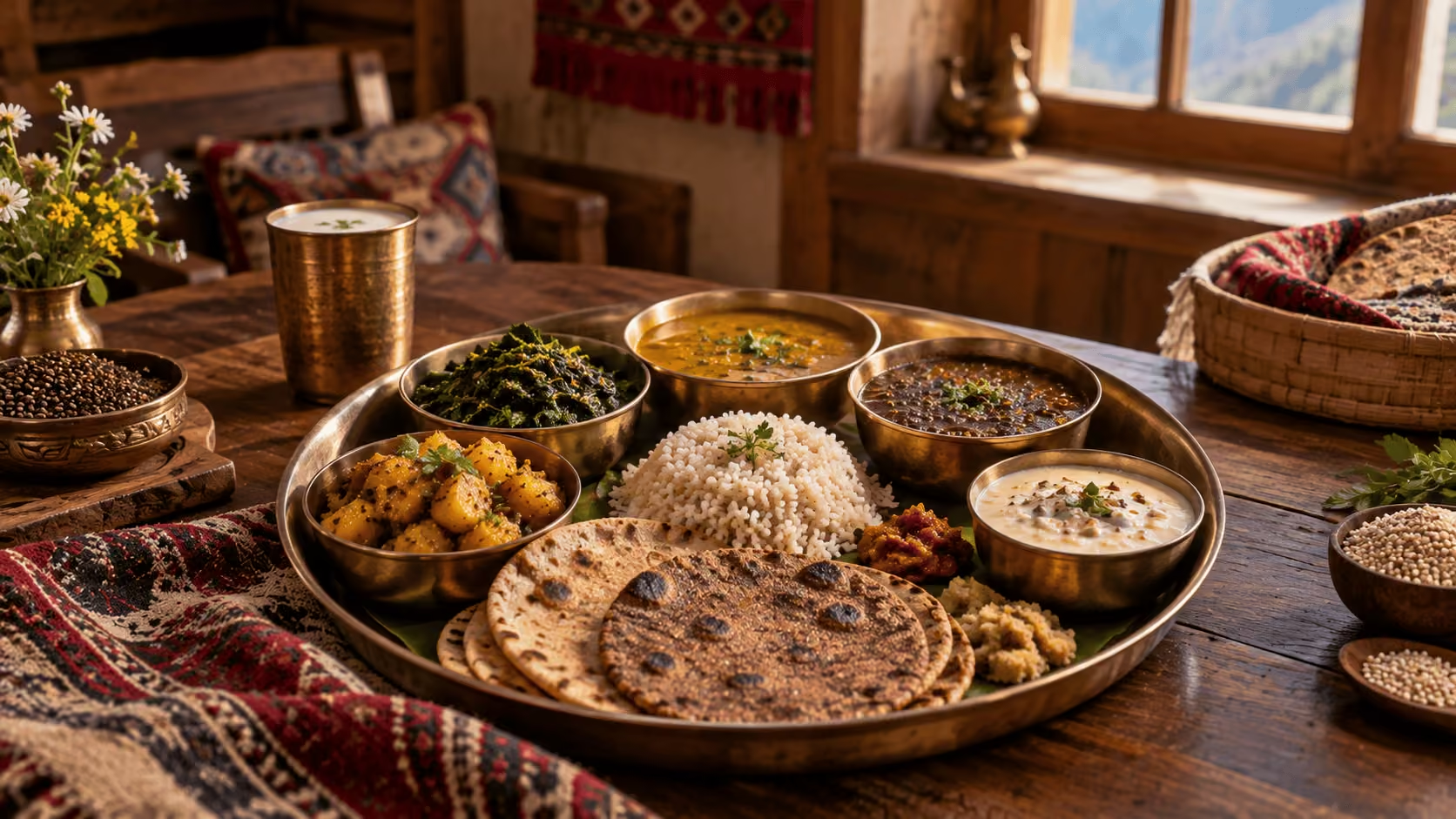
Sit down for a proper Garhwali thali, and you'll notice something right away: nothing on the plate is trying too hard. No overpowering spice blends, no rich gravies drowning in cream. Just millet rotis, mountain lentils, wild greens, and a quiet confidence that comes from centuries of cooking exactly what the land provides. So why does a cuisine this understated hold such a firm grip on Uttarakhand's cultural identity? And what actually lands on your plate when you order one?
Let's walk through it, dish by dish.
What Is a Garhwali Thali, Really?
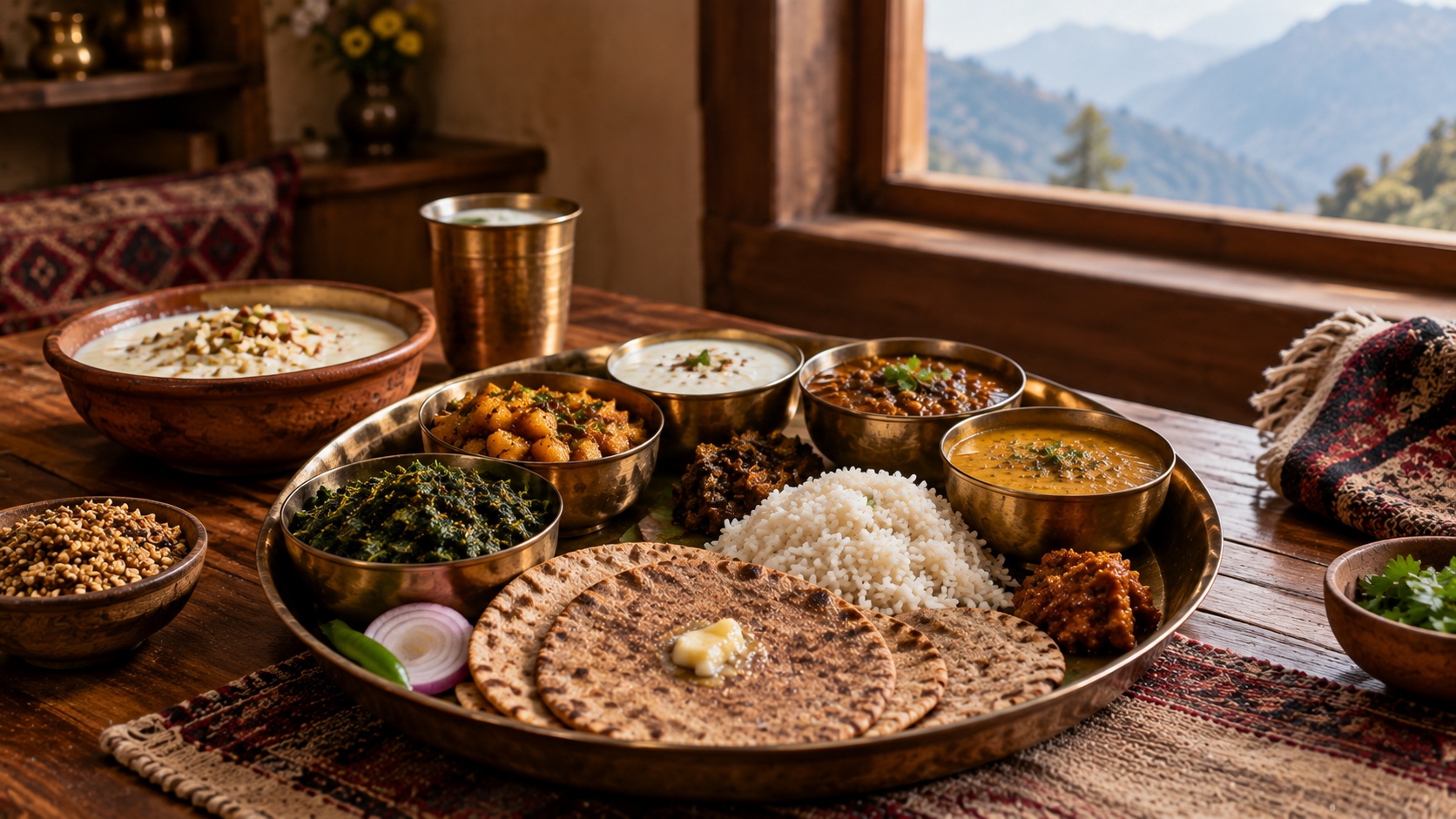
Garhwali thali represents the traditional meal of the Garhwal region in Uttarakhand, one half of the state's broader Pahari cuisine, with Kumaoni food making up the other. Unlike the plains, where meals often lean on heavy spice combinations and rich oils, Garhwali cooking stays close to the mountains it comes from. Locally grown grains, seasonal vegetables, native lentils, and dairy form the backbone of nearly every dish.
Isn't it interesting how a region's geography ends up dictating its entire food identity? Garhwal sits high in the Himalayas, where farming conditions favor hardy crops over delicate ones. That single fact shapes everything you'll find on a Garhwali thali.
The Grains That Anchor the Meal
Rice shows up on the plate, sure, but it's not the star. Mandua, or finger millet, takes centre stage in most Garhwali homes. Ground into flour and cooked as roti, mandua ki roti carries a slightly nutty flavor and delivers a serious nutritional punch, packed with calcium, iron, and fibre. Locally, people often call it koda.
Jhangora, or barnyard millet, plays a similar role. It shows up in kheer form as a dessert, or as a base grain in savory preparations. Chaulai, amaranth, rounds out the trio of grains that keep Garhwali meals lighter on the stomach than most people expect from a hill cuisine.
Why does millet dominate here rather than wheat or rice? Simple geography again. Millets grow well in the kind of terrain and climate Garhwal offers, where lowland cereals struggle. Locals built their cuisine around what actually thrives on their mountainsides, not around what looked prestigious on a plate.
The Lentils That Define Garhwali Cooking
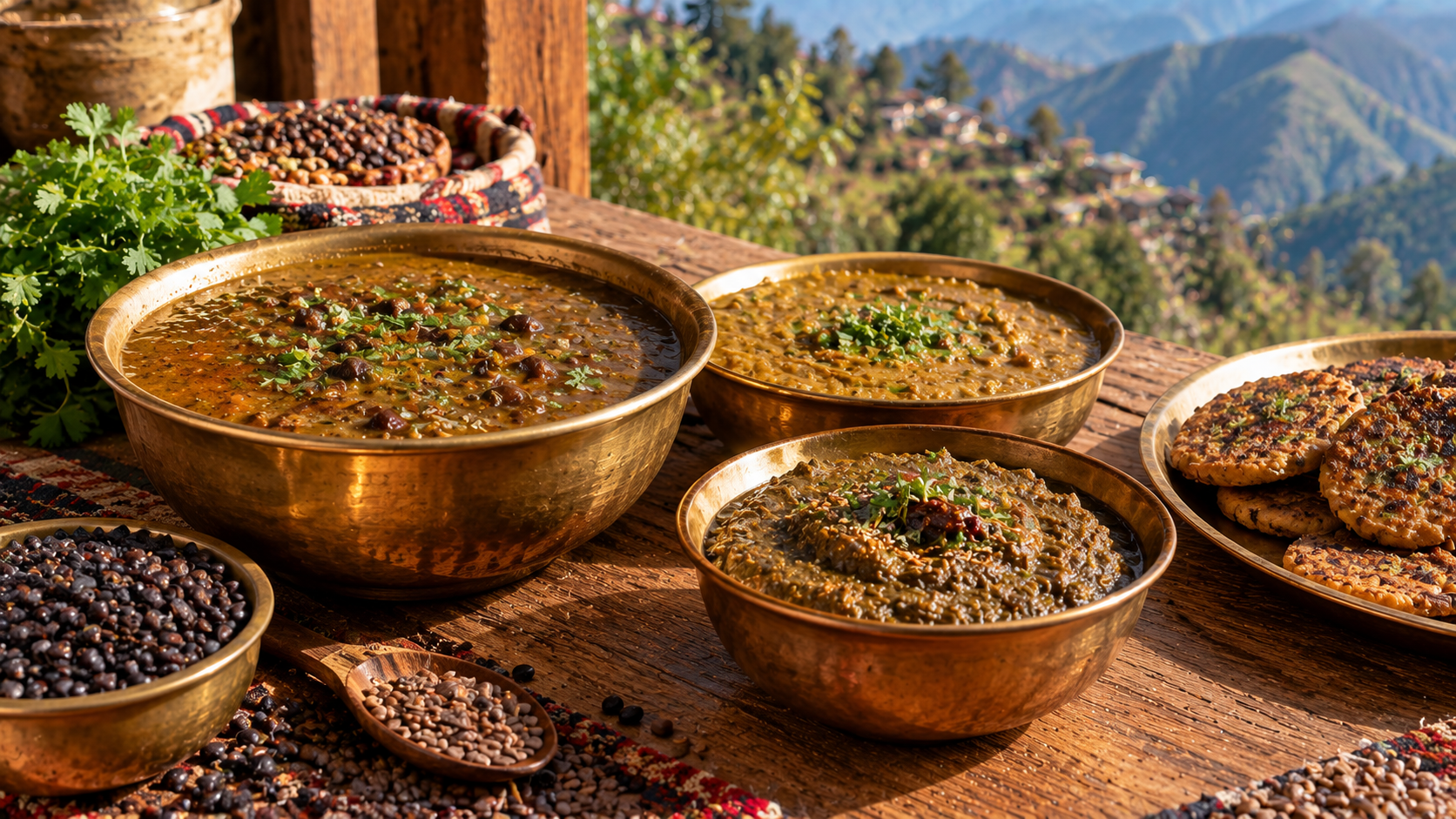
Ask any Garhwali family what they eat daily, and lentils will top the list almost every time. Gahat, also called kulath or horse gram, stands out as one of the most distinctive pulses in the region. Cooked slowly with ghee and spices, gahat ki dal turns into a rich, soup-like dish that's both filling and deeply nutritious.
Bhatt, a type of black soybean, appears constantly too, either in dal form or ground into a thick batter for phaanu, a preparation where the lentil batter serves double duty as both a gravy and the base for small pan-cooked cakes. That's a clever use of a single ingredient stretched across two textures in one meal.
Chainsoo deserves a mention here as well. Made from black gram dal blended with coriander, garlic, turmeric, and garam masala, this protein-rich dish shows how Garhwali cooks extract maximum flavor from minimal ingredients.
The Greens That Set Garhwal Apart
Here's a detail that actually separates Garhwali food from its Kumaoni neighbor: Garhwalis lean heavily into greens. Kafuli, made from spinach and fenugreek leaves cooked together in an iron kadai, stands as one of the most recognized dishes from the region. Locals often pair it with steamed rice, and the dish has earned a reputation as one of the healthiest items on any Garhwali thali.
Kandali ka saag, made from nettle leaves, takes things a step further. Cooks balance the natural bitterness of nettle with sweeter, earthier greens, turning what sounds like a foraged afterthought into a genuinely refined dish. Doesn't it say something about a cuisine when even wild, stinging plants get transformed into something worth savoring?
Vegetables, Fish, and Everything Else on the Plate
Potatoes make frequent appearances, most notably in aloo ke gutke, a dish where boiled potatoes get mashed lightly and cooked with garlic, tomatoes, and mustard seed tempering. It's simple, but it's the kind of simple that locals return to again and again.
Thenchwani brings mountain radish and mountain potato into the picture, crushed together with ginger and garlic and finished with aromatic spices. Near riverside regions like Tehri, trout fish curry occasionally joins the thali, flavored with jakhiya, a distinctly local mustard seed variant that gives dishes a sharp, nutty crackle when tempered in hot oil.
Jakhiya itself deserves recognition as one of Garhwal's signature spices. You won't find it dominating recipes elsewhere in India, and locals use it the way other regions might use mustard seeds, tempered in oil until they pop and release their flavor into the dish.
The Sweet Ending
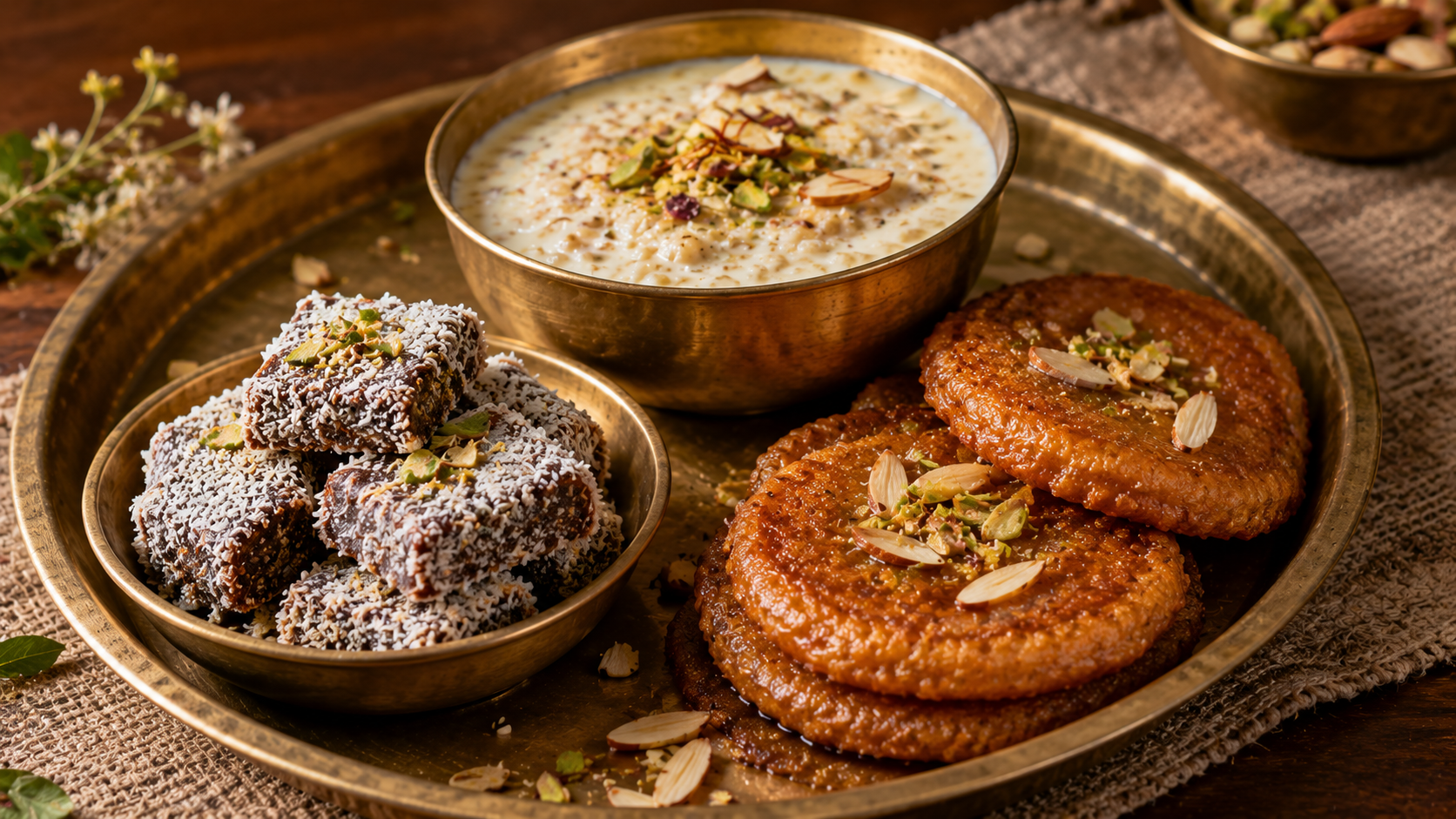
No thali feels complete without something sweet, and Garhwali cuisine offers a few standouts. Bal mithai, made from roasted khoya and sugar and coated in tiny sugar-coated threads, ranks among the most beloved sweets from the broader Uttarakhand region. Arsa, a rice-based sweet made with mustard oil and cane sugar, traditionally appears at weddings and festive occasions rather than daily meals.
Jhangori ki kheer, the millet-based pudding mentioned earlier, often closes out a full thali experience, especially in more elaborate settings.
Why This Cuisine Carries So Much Cultural Weight
So why does something this modest hold such deep cultural significance? Part of the answer lies in how tightly Garhwali food ties into daily life and ritual. This isn't cuisine built for restaurants or performance. It developed inside an agrarian lifestyle, where families cooked what their own land produced, season after season, without needing anything imported or elaborate.
Slow cooking over wood-fired stoves isn't just a rustic aesthetic choice either. It's a practical method that suits the ingredients: lentils that need time to soften properly, greens that release their best flavor over gentle heat, millets that benefit from unhurried cooking. The technique and the ingredients evolved together, shaped by mountain life rather than borrowed from anywhere else.
There's also a quieter cultural story here about resourcefulness. Communities living at altitude, with limited growing seasons and challenging terrain, built an entire culinary identity around making the most of hardy grains and native pulses that other regions might overlook. That's not just food. That's generations of adaptation turned into something people now travel specifically to taste.
Experiencing It the Right Way
Reading about Garhwali thali only gets you so far. The dishes change character depending on where you eat them, a homestay kitchen using generations-old recipes offers something a restaurant reproduction simply can't match. The wood-fire aroma, the specific ratio of spices a family has used for decades, the way kafuli tastes when it's made with greens picked that same morning: none of that translates fully onto a printed menu description.
FAQ
1.What makes Garhwali cuisine different from Kumaoni cuisine?
Both fall under the umbrella of Pahari cuisine, but Garhwali cooking leans more heavily into greens like kafuli, while Kumaoni cuisine has its own distinct specialties and spice preferences, even though the two share many overlapping ingredients.
2.Is Garhwali food generally spicy?
No. Garhwali cuisine uses mild spices like turmeric, cumin, coriander, mustard seeds, and jakhiya, favoring flavor built through slow cooking rather than heat.
3.What is jakhiya, and why does it matter so much in Garhwali cooking?
Jakhiya is a local mustard-like seed used for tempering. It gives dishes a distinct crackle and nutty flavor that's hard to replicate with any other spice, making it one of the defining ingredients of the region's cuisine.
4.Can vegetarians enjoy a full Garhwali thali without missing much?
Absolutely. The cuisine is largely vegetarian by default, built around lentils, millets, and greens, with fish or meat appearing only occasionally in specific riverside regions.
5.Are Garhwali dishes considered healthy?
Yes. The reliance on millets, lentils, and leafy greens, combined with minimal oil and gentle spicing, makes Garhwali food naturally nutritious and easy to digest.
At the end of the day, a Garhwali thali isn't just a meal, it's a small window into how an entire mountain community has eaten, celebrated, and survived for generations. Tasting it properly means sitting down where the tradition actually lives, surrounded by the same hills that shaped every dish on the plate.
Ready to taste it firsthand? Book your stay at Ramgarh Vatika and let an authentic Garhwali thali find its way to your table.
