


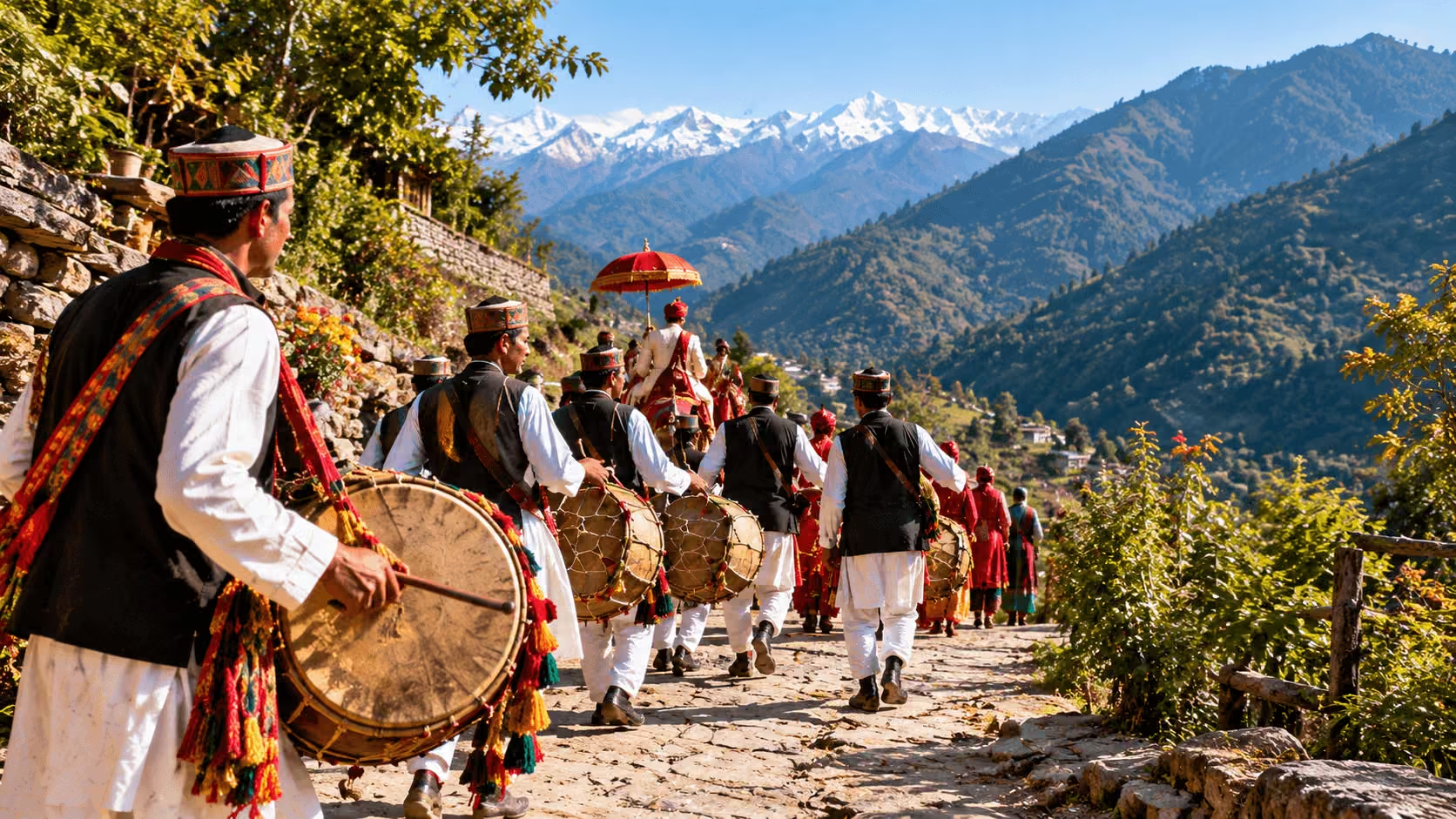
Walk into any traditional wedding in the hills of Uttarakhand, and before you see the bride or the baraat, you'll hear it. A steady, commanding rhythm rolling down the valley, drums announcing the celebration long before anyone arrives. Why does a wedding here feel incomplete without that sound? And what exactly makes dhol damau so central to how Uttarakhandis celebrate marriage?
Let's unpack it properly.
What Exactly Is Dhol Damau?
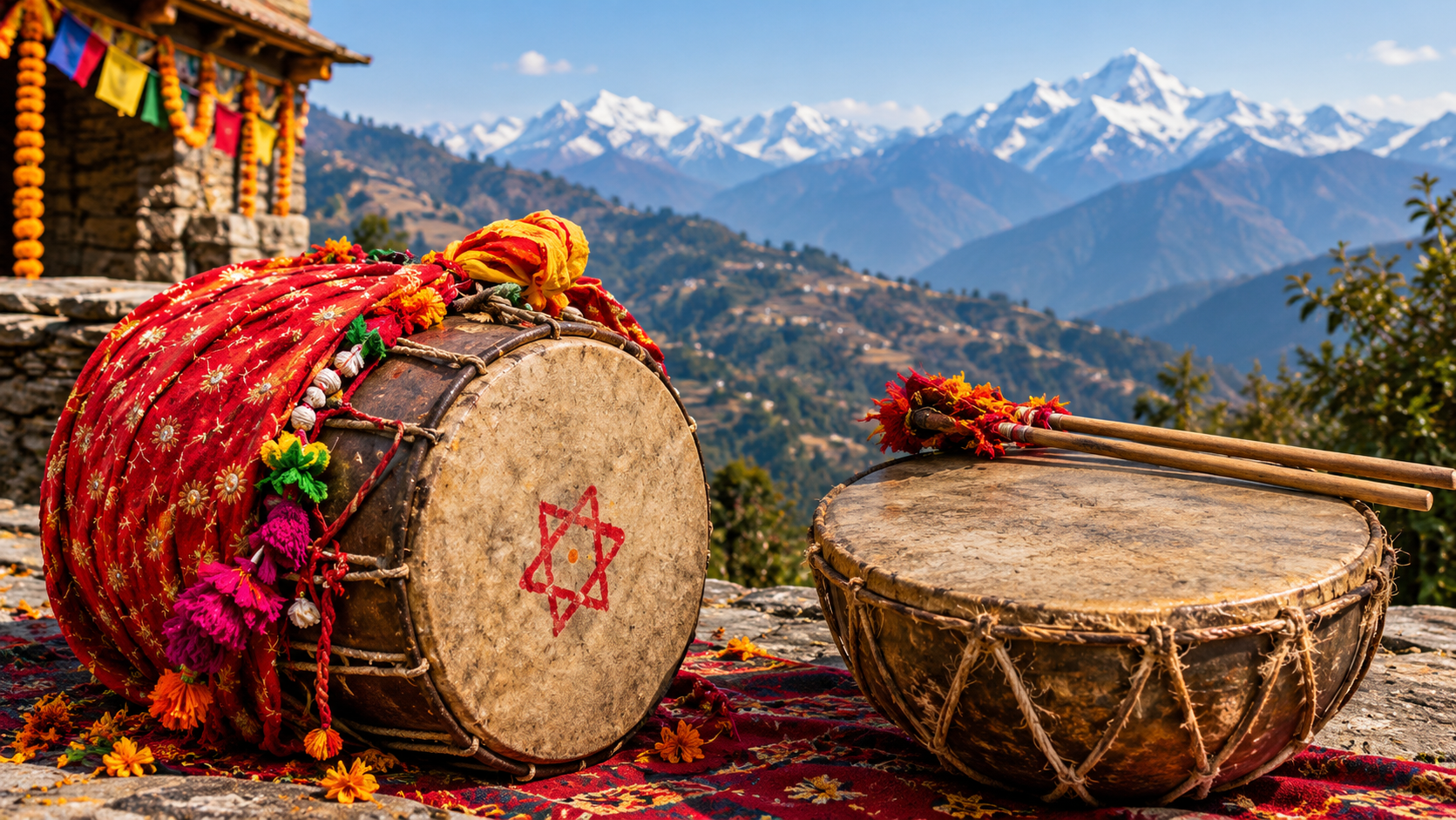
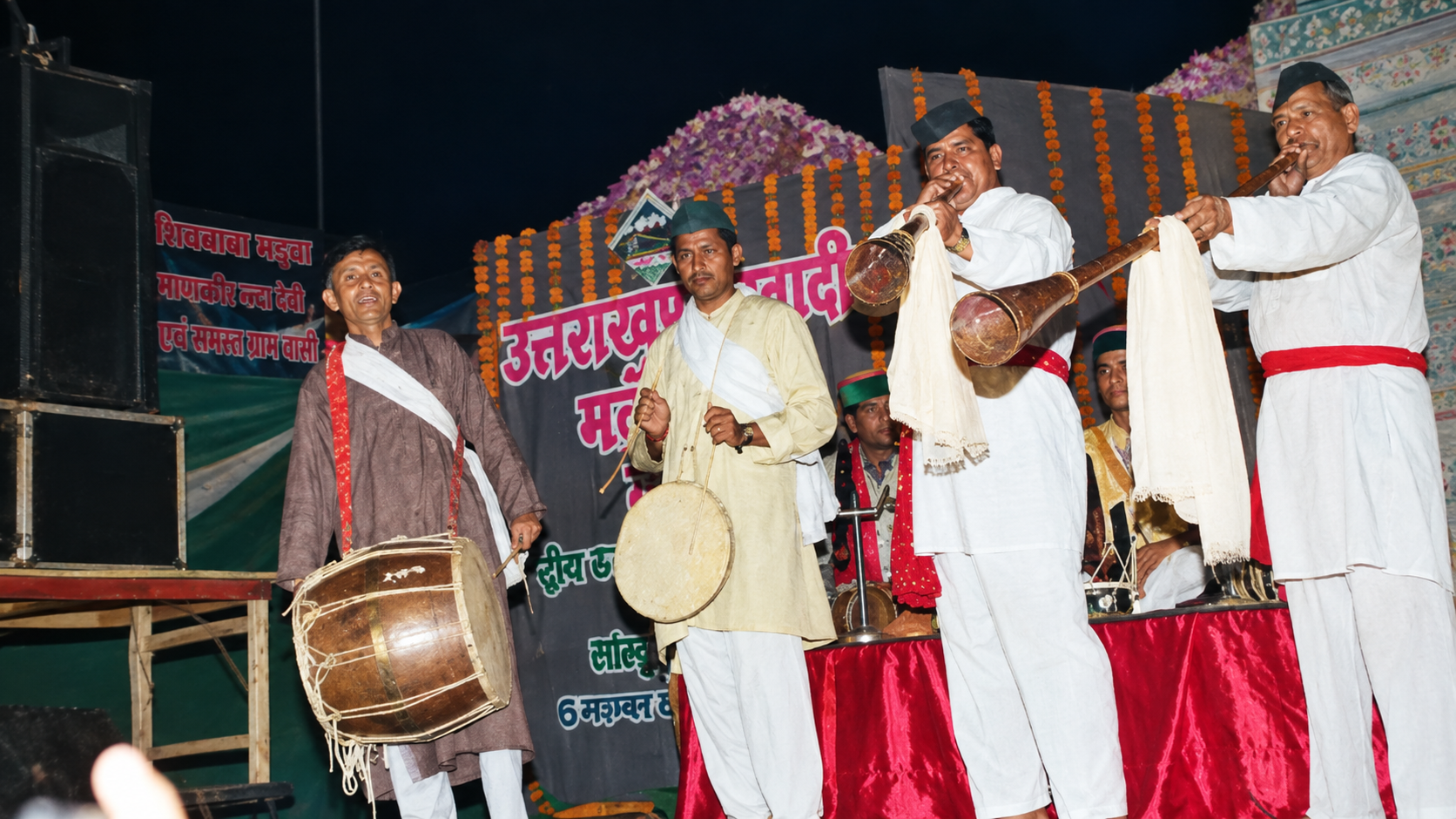
Dhol damau refers to two folk instruments of Uttarakhand and parts of Himachal Pradesh, almost always played together. The dhol is a large double sided drum, while the damau is a smaller kettle shaped drum with a metallic body that produces a sharp, resonant tone. Played in tandem, the two instruments create layered rhythms that locals have relied on for generations, not just for entertainment but for marking nearly every significant life event.
Births, weddings, religious festivals, folk dramas like Pandav Lila, even death rituals. All of them traditionally call for dhol damau. That alone tells you something important. This isn't background music. It's a language the hills have used for centuries to mark what matters.
The Ancient Rulebook Behind the Rhythm
Here's something most outsiders never realize. The rhythms played at a Kumaoni or Garhwali wedding aren't improvised. They follow Dhol Sagar, an ancient oral treatise that has never existed in a complete printed form. Passed down through generations of drumming families, it lists specific rhythmic patterns meant for specific occasions, including christening ceremonies, religious festivals, wedding processions, and shamanic rituals.
Doesn't that completely change how you think about a drummer at a wedding? These musicians aren't just keeping a beat. They're reciting, through rhythm, a tradition that's been preserved almost entirely through memory and practice rather than written notation.
Traditionally, the players come from specific musical caste groups such as auji, bajgi, das, or dholi. These families have carried the Dhol Sagar knowledge forward, often facing real hardship to keep the practice alive, especially as younger generations move to cities or turn toward newer forms of celebration involving DJs and brass bands.
Why the Rhythm Changes as the Wedding Moves
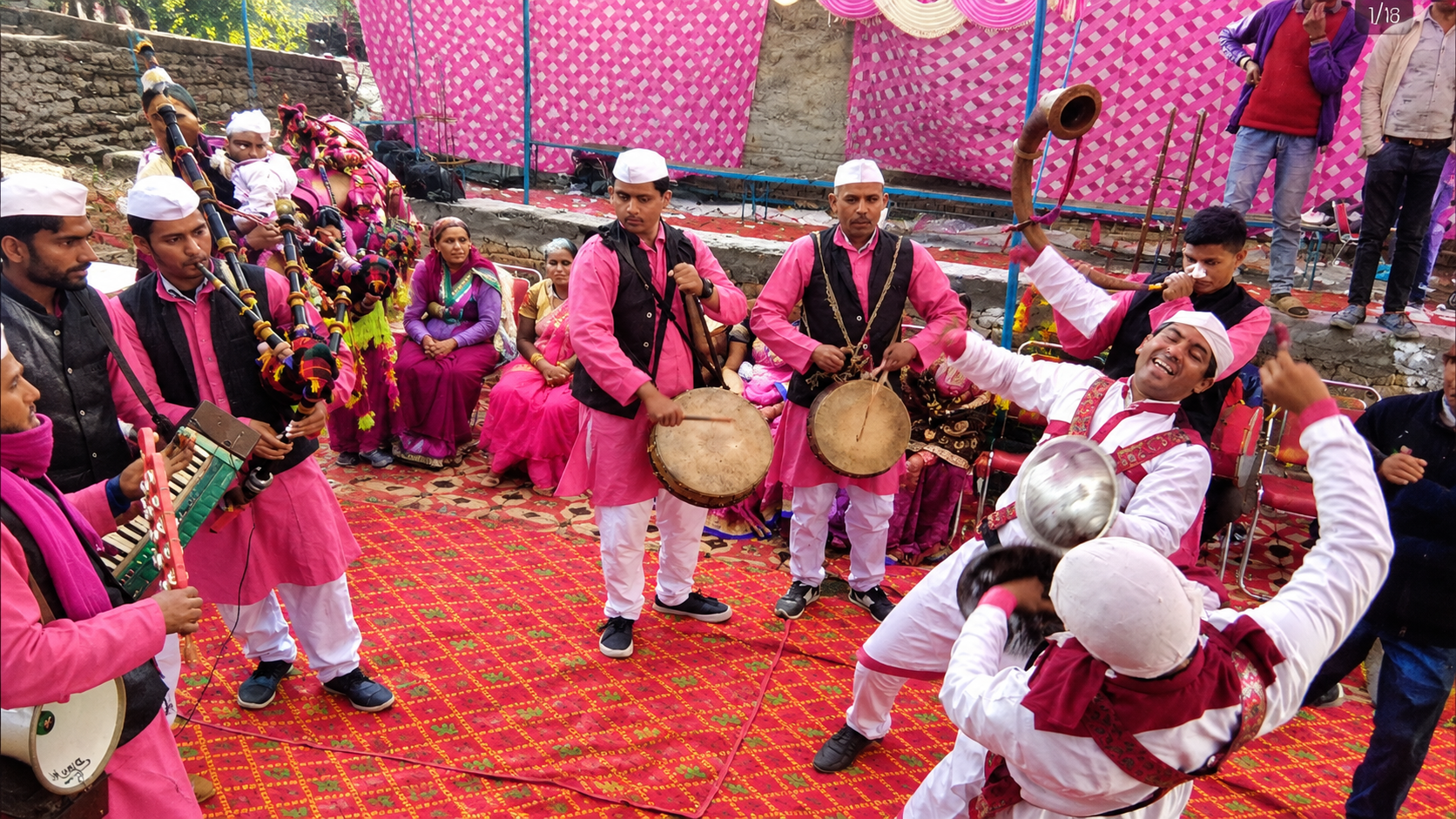
One detail that surprises most visitors is how dynamic the music actually is during the ceremony. Researchers studying Garhwal Himalayan weddings have noted that the performance of traditional drummers accompanying the wedding procession changes according to their geographical positioning at a given time. In other words, the rhythm shifts depending on where the baraat is in its journey, climbing toward the venue, arriving at the gate, or reaching the mandap itself.
That's a level of precision you won't find in a generic wedding band. The drummers essentially narrate the wedding's physical and emotional journey through sound, adjusting their rhythm to match each stage of the ceremony as it unfolds.
The Maangal Tradition and Spiritual Significance
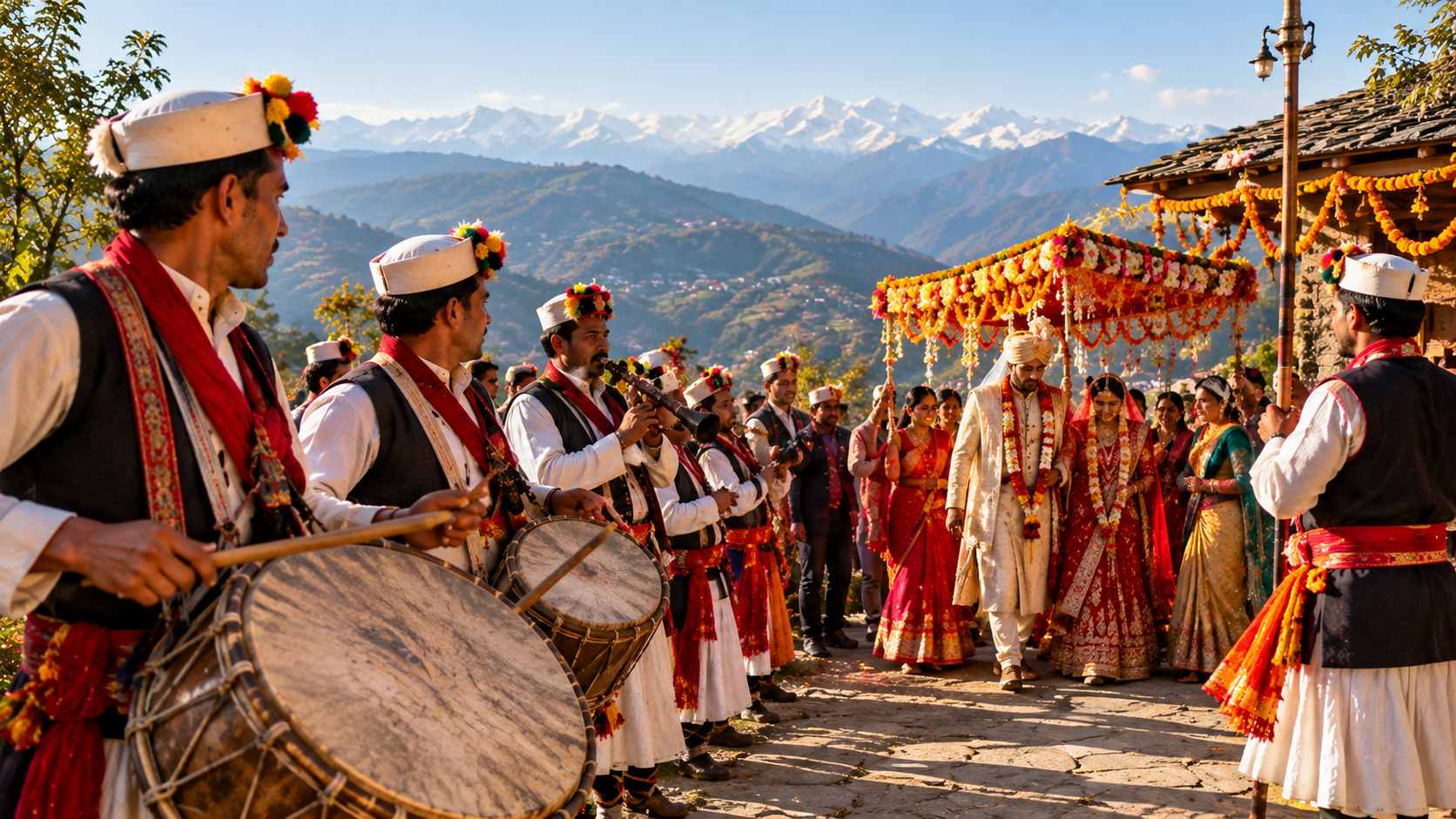
Beyond rhythm and procession, dhol damau carries real spiritual weight at Uttarakhandi weddings through the maangal tradition, where musicians invoke Hindu deities to bless the couple with peace, prosperity, and happiness. This isn't just music accompanying a ceremony. It's treated as an auspicious act in itself, considered necessary for the wedding to carry the right blessings.
Alongside the drumming, traditional folk songs often fill the celebration too, tunes like Bedu Pako Bara Masa, Surma Sarela, and Gori Mukhdi Dil Ma, creating what locals describe as a timeless folk playlist that runs through the entire event. Isn't it remarkable that a wedding soundtrack can stay unchanged for generations and still feel completely alive each time it's played?
Chholiya and the Dance That Rides on the Drums
In many Kumaoni weddings, dhol damau doesn't stand alone. It accompanies Chholiya, a traditional sword dance performed at marriage ceremonies, where dancers move in sync with the drumbeats, sometimes alongside bagpipes as well. The imagery draws on old tales of warfare and marriages historically conducted at sword point, giving the wedding procession a dramatic, almost theatrical energy that modern wedding entertainment rarely replicates.
Watching Chholiya unfold to the beat of dhol damau makes it obvious why this pairing has survived so long. The drums don't just provide rhythm for the dancers. They drive the entire emotional tempo of the procession.
A Tradition Under Quiet Pressure
It's worth being honest about where this tradition stands today. The unwritten knowledge of Dhol Sagar faces real risk of fading, partly due to urban migration among the youth in drumming families, and partly because of the growing popularity of brass bands and DJs at village weddings. Some traditional drummers have given up the practice entirely, even as others remain devoted to carrying it forward despite the shrinking demand.
At the same time, two person drumming teams can still earn a respectable amount from a single wedding today, with earnings climbing higher depending on the number of accompanying musicians. That suggests the tradition hasn't disappeared, it's simply competing harder for space in a changing celebration culture. Every wedding that still books a dhol damau team instead of a DJ helps keep that lineage alive for one more generation.
Why This Still Matters for Anyone Attending a Hill Wedding
If you ever get invited to a genuine Uttarakhandi wedding, pay attention to the drummers before anything else. What you're witnessing isn't simple festivity. It's a living transmission of oral knowledge, caste based craftsmanship, and spiritual ritual, all compressed into a rhythm most guests only register as background energy.
The Himalayas have quietly become one of India's most sought after destination wedding regions, and much of that appeal comes from exactly this kind of unfiltered, rooted tradition. Couples choosing the hills for their wedding aren't just picking scenic views. They're choosing to be married inside a ceremony that still carries centuries of sound, ritual, and meaning intact.
FAQ
1.What's the difference between a dhol and a damau?
The dhol is a large double sided drum providing the primary rhythm, while the damau is a smaller, metallic kettle shaped drum that adds a sharp, driving beat alongside it. They're almost always played together.
2.Who traditionally plays dhol damau at weddings?
Musicians from specific caste groups such as auji, bajgi, das, or dholi have traditionally carried this knowledge forward, passing down the rhythms of Dhol Sagar through oral teaching rather than written notation.
3.Is dhol damau only played at weddings?
No. The same instruments and treatise cover births, religious festivals, folk dramas, and even death rituals, making them central to nearly every major life event in Uttarakhandi culture.
4.What is the maangal tradition?
It's a ritual practice where musicians use their playing to invoke blessings from Hindu deities for the couple, treating the music itself as spiritually significant rather than purely celebratory.
5.Why is Chholiya often performed alongside dhol damau?
Chholiya is a traditional sword dance tied to Kumaoni wedding processions, and the dancers move directly in sync with the drumbeats, making the two traditions deeply intertwined during celebrations.
6.Is the dhol damau tradition still common at modern Uttarakhandi weddings?
It's practiced less than before due to the rise of DJs and brass bands, but many families, especially in villages and destination hill weddings, still actively book traditional drummers to preserve the custom.
Where Tradition Still Plays On
A wedding in the hills without dhol damau would feel like a ceremony missing its own heartbeat. The drums carry history, blessing, and emotion in a way no modern substitute quite manages to replace, which is exactly why locals continue to insist on the real thing, generation after generation.
Want to experience the rhythm of a genuine Himalayan celebration for yourself? Book your stay at Ramgarh Vatika and let the mountains set the tempo for your own getaway.
