


What makes Mathura different from other ancient cities?
Mathura is known as the birthplace of Lord Krishna and the cultural heart of the Braj region. This importance is not limited to history or belief alone. It continues to shape the city’s traditions, daily life, and local culture even today.
Located along the Yamuna River in Uttar Pradesh, Mathura brings together heritage, living traditions, and everyday routines in a natural way. This Mathura travel guide is written for travelers who want to understand the city clearly while exploring it with comfort and respect. Along with places to visit and cultural context, it also helps you know where to stay in Mathura for a calm and well-planned trip.
Why Mathura Holds a Unique Place in Indian Spiritual History?
A common confusion among travelers planning a trip here is the difference between Mathura and Vrindavan. Understanding this clearly helps travellers plan their visit better and avoid missing essential experiences during their Mathura Vrindavan travel.
Here is the simple distinction.
Mathura is Krishna’s birthplace. It is where the Krishna Janmasthan Temple stands, where Vishram Ghat hosts evening aartis, and where the Yamuna flows past old ghats linked with daily rituals and local life.
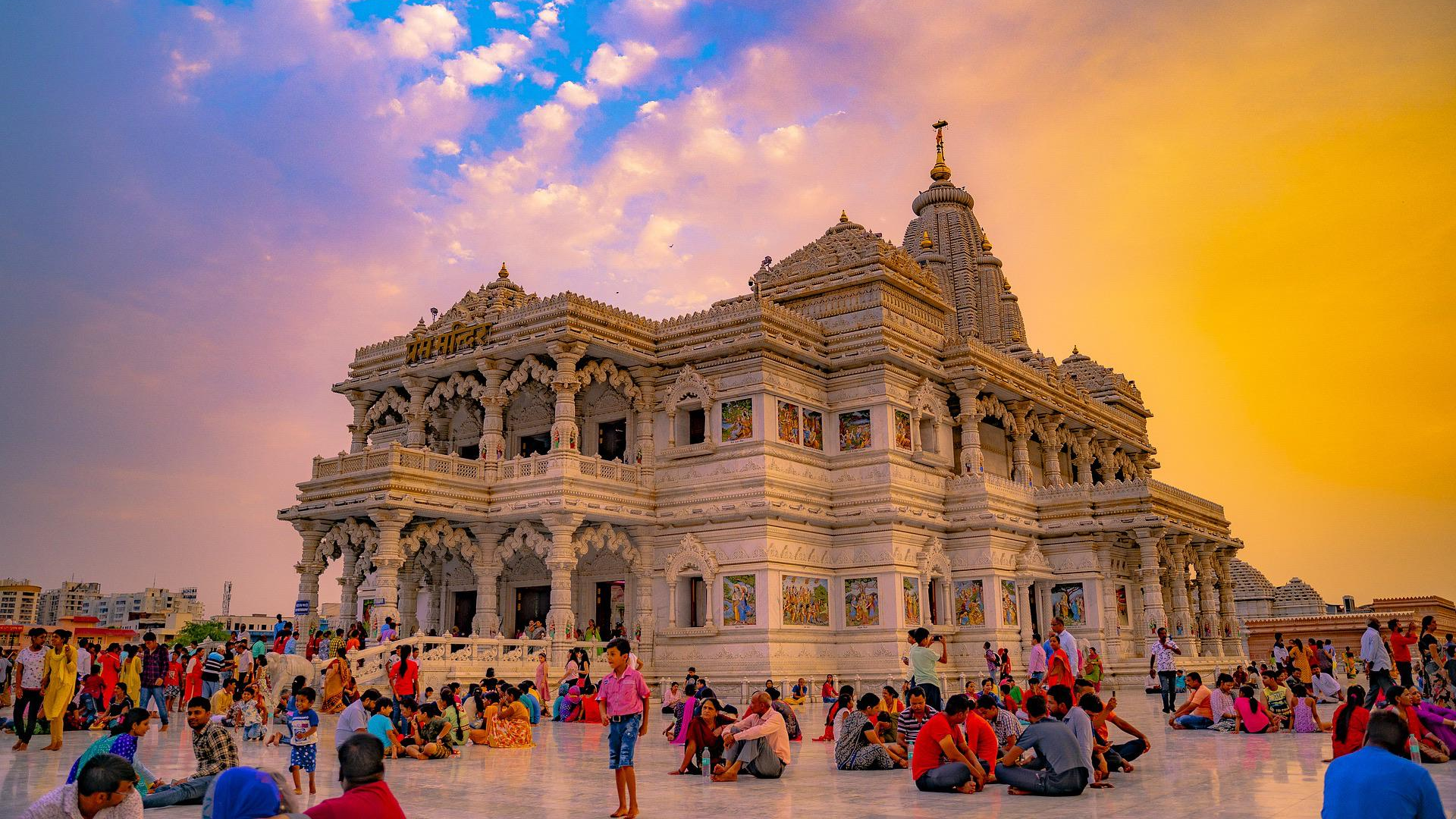
Vrindavan, located just 12 kilometers away, is where Krishna spent his childhood. The town is filled with temples such as Banke Bihari Temple, ISKCON Vrindavan, and Prem Mandir, each representing different forms of devotion.
Together, Mathura and Vrindavan form Braj Bhoomi, the land closely connected with Krishna’s early life. Travellers who visit only Mathura or only Vrindavan miss half the story. The two towns complement each other and offer a fuller spiritual and cultural experience.
To experience the region entirely, plan to explore both. Mathura offers quieter, older temples and river rituals, while Vrindavan is known for larger temples and heavier crowds. Staying at Raasvan, Vrindavan by AM Hotel Kollection makes it easy to explore both Mathura and Vrindavan at a relaxed pace.
Top 10 Spiritual and Cultural Places to Visit in Mathura
This section of the Mathura travel guide covers the most important spiritual and cultural places across Mathura and Vrindavan, helping travelers understand what to visit, why it matters, and how to experience each place respectfully.
1. Krishna Janmabhoomi and Janmasthan Temple
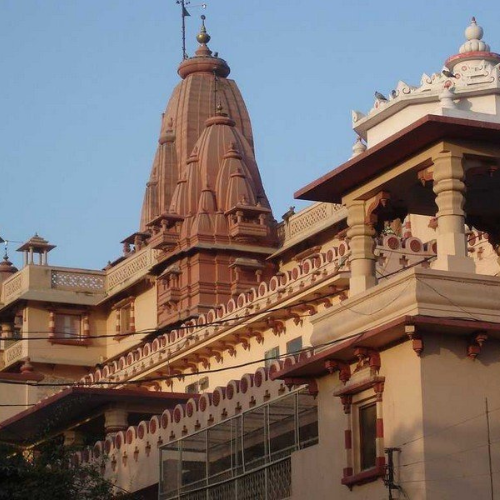
This is the spiritual core of Mathura and the place most closely associated with Lord Krishna’s birth. The temple complex houses the prison cell where Krishna is believed to have been born, making it deeply significant for devotees. Security checks are strict due to its religious and historical importance, and crowds are common, especially during Janmashtami and weekends.
Krishna Janmabhoomi is considered the most significant site in Mathura tourism, especially for devotees visiting the Krishna birthplace, Mathura.
The space is not designed to impress visually. It is intended to be felt. Devotees stand quietly in long queues, chants echo softly, and the atmosphere feels restrained and solemn. Modest clothing is expected, footwear must be removed, and patience is essential during peak hours.
Location: Janmabhoomi Road, Mathura, Uttar Pradesh
Timings: 5:30 AM – 12:00 PM, 4:00 PM – 8:30 PM (closed midday)
2. Yamuna River Ghats – Vishram Ghat and Keshi Ghat
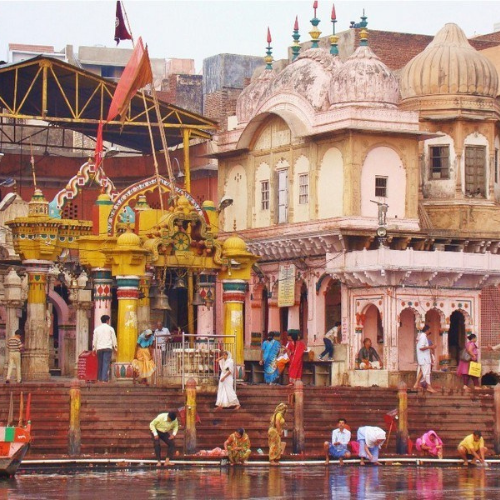
The ghats of Mathura represent daily life intertwined with faith. Among the many ghats along the Yamuna, Vishram Ghat holds the highest importance. It is believed that Krishna rested here after defeating Kansa, and it marks the beginning and end of the traditional Mathura parikrama.
The evening Yamuna Aarti around 7 PM is a quiet yet powerful experience. Oil lamps, floating diyas, and rhythmic chants create an atmosphere that feels sacred rather than staged. Morning visits to Keshi Ghat and Vishram Ghat are calmer, allowing visitors to observe rituals and local life in its most natural form.
For travelers interested in Mathura sightseeing places that reflect everyday spiritual life rather than temple rituals alone, the ghats offer a more grounded experience.
Location: Along the Yamuna River, central Mathura
Timings: Open through daylight hours; evening Yamuna Aarti around 7:00 PM
3. Dwarkadhish Temple
Built in 1814, the Dwarkadhish Temple is dedicated to Lord Krishna as the King of Dwarka. The temple is known for its black marble idol, detailed carvings, and vibrant wall paintings that reflect a mix of Rajput and Mughal styles. It stands out for its lively atmosphere and strong community presence.
Unlike the restrained mood of Janmabhoomi, this temple feels celebratory. Morning Mangala Aarti and evening Sandhya Aarti attract large crowds. The temple is located in the heart of the city and is easily accessible by foot or auto-rickshaw.
Dwarkadhish Temple is among the most visited Mathura sightseeing places, known for its lively aartis and strong local community presence.
Location: Ghati Bahal Rai, Mathura
Travelers planning to visit both Mathura and Vrindavan often prefer staying in Vrindavan for better pacing. A calm base like Raasvan, allows easy access to major temples while offering a quieter environment at the end of the day.
4. ISKCON Temple Vrindavan
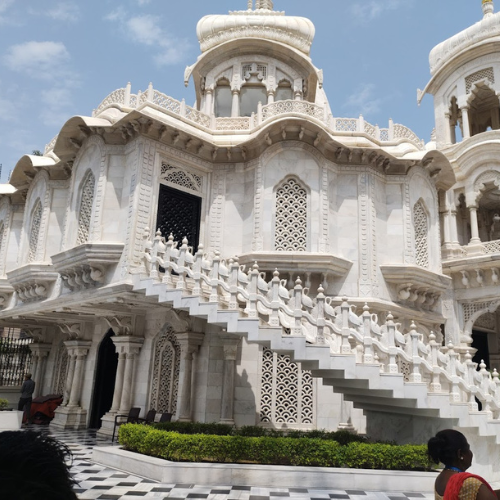
ISKCON Mathura, officially known as the Krishna Balaram Mandir in Vrindavan, offers a modern and well-organized spiritual environment. It is especially suitable for international visitors and those who prefer organized temple rituals and a disciplined devotional routine. The temple complex includes clean facilities, English-speaking guides, a bookstore, and vegetarian dining options.
The chanting sessions and aartis are disciplined and easy to follow, creating a calm yet uplifting experience. While it differs from traditional Braj temples, it provides comfort and clarity for first-time visitors.
ISKCON Mathura is particularly popular among international travellers and first-time visitors seeking structured spiritual experiences during Mathura Vrindavan travel.
Location: Raman Reti, Vrindavan
Timings: 4:30 AM – 1:00 PM, 4:00 PM – 8:30 PM
For visitors planning extended temple time, staying close matters. Raasvan by AM Hotel Kollection is a vrindavan hotel near ISKCON temple, offering a calm, clean, and respectful stay just minutes away from ISKCON.
After a full day of aartis and chanting, Raasvan gives you the comfort, quiet, and proximity that spiritual travelers truly need.
5. Radha Raman Temple
Radha Raman Temple is one of the most respected traditional temples in Vrindavan. It is known for its ancient deity of Krishna, believed to have manifested from a shaligram stone. The temple follows centuries-old rituals that have remained unchanged over time.
There is no idol of Radha here, yet she is symbolically present through a sacred crown placed beside Krishna. The temple feels intimate and deeply devotional, appealing to visitors seeking authenticity rather than scale.
Radha Raman Temple represents the older devotional traditions of Braj Bhoomi, appealing to visitors seeking authentic spiritual practices.
Location: Seva Kunj Road, Vrindavan
Timings: 5:00 AM – 12:00 PM, 5:30 PM – 8:30 PM
6. Radha Vallabh Temple
Radha Vallabh Temple places Radha at the center of worship, a unique tradition within Krishna devotion. The temple emphasizes Radha’s spiritual importance rather than physical representation, making it philosophically distinct.
The rituals are personal and less crowded compared to major temples. This space suits visitors who want a quieter, contemplative experience rooted in Braj traditions.
Radha Vallabh Temple reflects a unique philosophical tradition within Braj devotion, making it distinct among spiritual places in Mathura and Vrindavan.
Location: Near Banke Bihari Temple, Vrindavan
Timings: 5:00 AM – 12:00 PM, 5:30 PM – 8:30 PM
7. Govardhan Hill
Govardhan Hill is a key destination for Krishna devotees and forms an integral part of traditional pilgrimage routes around Mathura, a region long regarded as a Hindu pilgrimage town.
It holds immense significance in Krishna’s life, as it is believed he lifted the hill to protect villagers from heavy rains. Devotees perform the Govardhan Parikrama, a barefoot walk around the mountain, as a deeply personal act of devotion.
The area feels rural and peaceful, offering a contrast to the busy temple towns. It is best visited early in the morning or during cooler months.
Location: Near Mathura, Uttar Pradesh (about 22 kilometers from the city)
Timings: Open through daylight hours; best visited early morning
8. Nidhivan
Nidhivan is believed to be the place where Krishna performs the Ras Leela every night. Entry after sunset is restricted due to strong local beliefs. During the day, it feels calm, shaded, and deeply symbolic.
The site is less about visuals and more about belief and atmosphere. Visitors are expected to maintain silence and respect.
Location: Vrindavan
Timings: 5:00 AM – 8:00 PM (entry closes strictly at sunset)
9. Barsana
Barsana is believed to be the birthplace of Radha. The town is known for the Radha Rani Temple, perched on a hill, offering panoramic views of the surrounding region.
Barsana is especially famous during Holi, but outside festivals, it feels quiet and traditional.
Location: Near Mathura, Uttar Pradesh
Timings: 5:00 AM – 8:00 PM
10. Kusum Sarovar
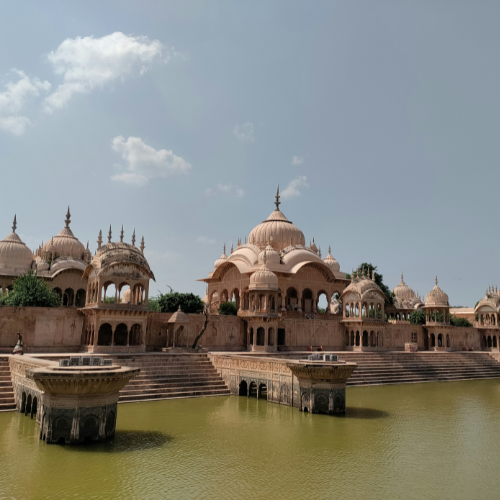
Kusum Sarovar is a historic reservoir linked to Radha and the gopis. It combines spiritual significance with architectural beauty, featuring sandstone steps and cenotaphs.
Early mornings and evenings are ideal for visiting, when the area feels peaceful and reflective.
Location: Near Govardhan Hill
Timings: Open through daylight hours; best at sunrise or sunset
Suggested 2-Day Itinerary: How to Sequence Your Visit
With ten places across two towns, it helps to have a rough plan rather than bouncing back and forth. Here's a sequence that keeps travel time low and pairs each stop with the time of day it suits best.
Day 1 — Mathura
-
Morning: Start at Krishna Janmabhoomi and Janmasthan Temple while queues are shortest, then walk to Dwarkadhish Temple in time for the morning Mangala Aarti.
-
Midday: Explore Vishram Ghat and Keshi Ghat, and take a slow walk through Krishna Nagar Market for lunch and local shopping.
-
Evening: Return to Vishram Ghat for the Yamuna Aarti around 7 PM — the most atmospheric close to a Mathura day.
Day 2 — Vrindavan and Around
-
Morning: Begin at ISKCON Temple Vrindavan for the disciplined morning rituals, then walk to nearby Radha Raman Temple and Radha Vallabh Temple, both a short distance apart.
-
Midday: Head toward Govardhan Hill and Kusum Sarovar for a quieter, open-air stretch of the day — best visited before the afternoon heat sets in.
-
Afternoon/Evening: Visit Nidhivan before sunset (entry is restricted after dark), then end the day at Barsana if time allows, or return to Vrindavan for a relaxed evening.
This pacing keeps Mathura's temple cluster on Day 1 and Vrindavan's on Day 2, with the outdoor, less time-sensitive stops (Govardhan Hill, Kusum Sarovar) placed mid-Day 2 when energy typically dips.
Best Time to Visit Mathura - Mathura travel guide
Choosing the right time can make a big difference when planning your trip using a Mathura travel guide. For most travelers, the best time to visit Mathura is from October to March, when the weather is pleasant and easy to manage.
October to March: During these months, temperatures usually stay between 10°C and 25°C. This makes it easier to explore temples, ghats, and nearby villages without facing extreme heat. It is also the most comfortable season for walking, sightseeing, and short day trips.
April to June: From April to June, the region experiences very high heat, with temperatures often crossing 40°C. Unless your visit is connected to a specific festival, these months are best avoided, especially for daytime travel and outdoor exploration.
July to September: July to September brings monsoon rains. The surroundings turn greener, and crowds are fewer, but humidity increases, and some outdoor plans may be limited due to rain.
Janmashtami (August/September): Janmashtami in August or September is a powerful time to be in Mathura, but it can be challenging to manage. Both Mathura and Vrindavan see a vast number of pilgrims. Hotels fill up early, temple queues become long, and local transport is often crowded. If you plan to visit during Janmashtami, booking accommodation well in advance is essential.
For most travelers, November to February offers the easiest and most comfortable experience.
How to Reach Mathura and Move Around Comfortably?
Mathura is easy to reach by train, road, and air, making it a convenient stop for both short visits and longer trips.
By Train: Mathura Junction is a major railway station on the Delhi–Agra route, with regular trains from many major Indian cities. The station is located close to the main areas of the town, so you can easily reach temples and ghats by auto-rickshaw or taxi after arrival.
By Road: Mathura is about 145 kilometers from Delhi, 58 kilometers from Agra, and is well connected by highways, including the Yamuna Expressway. Private cabs, state-run buses, and buses from ISBT Kashmere Gate in Delhi are commonly used. App-based cabs are also available and work well for door-to-door travel.
By Air: The nearest airport is Kheria Airport, located around 65 kilometers away, but it has limited flight options. Most travelers prefer flying into Indira Gandhi International Airport, which is about 170 kilometers from Mathura, and then continuing by train or cab.
Local Transport and Getting Around
Auto-rickshaws and cycle-rickshaws are the main ways to get around Mathura and to travel between Mathura and Vrindavan. It is best to agree on fares before starting your ride, or use app-based cabs for transparent pricing.
Walking is easy in the main areas of Mathura, especially around the ghat area and the Krishna Janmabhoomi Temple complex. These areas are generally busy and safe during the day, making them comfortable to explore.
Things to Do in Mathura Beyond Temples
While temples define Mathura’s identity, the city has much more to offer for travelers who look beyond temples and rituals.
Cultural Walks
Spend time walking through the lanes near Vishram Ghat and Krishna Nagar Market. These areas still reflect old-world charm, with narrow streets, traditional homes, and small shops selling brass idols, rudraksha beads, and everyday devotional items. A slow walk here gives a real sense of local life.
Local Food
Mathura is known for its pure vegetarian food. Start your morning with kachoris and jalebis from local food stalls. Do not miss pedas, a milk-based sweet often considered Krishna’s favorite. Simple meals like chole bhature, lassi, and basic thalis at local eateries offer authentic flavors in a simple setting.
Evening Pacing
Rather than rushing between temples, allow your evening to unfold slowly. Watch the sunset at Vishram Ghat, observe evening prayers at Dwarkadhish Temple, or sit quietly by the Yamuna as diyas float on the river. Mathura rewards those who pause and observe.
Where to Stay Near Mathura and Vrindavan Temples?
Choosing the right place to stay is especially important in a pilgrimage town like Mathura and Vrindavan. Spiritual travelers need more than a place to sleep. They need quiet after long temple visits, clean vegetarian food, close access to temples, and a stay that respects the reason for the visit.
When looking at where to stay near Mathura temples, comfort should come before showy luxury. Clean rooms, a calm atmosphere, and respectful service matter more than extra decoration. Early check-in and late check-out can make managing temple timings much easier. Basic needs like parking, free Wi Fi, and power backup are also essential, especially in temple areas.
The best stays recognize that pilgrimage involves both devotion and physical rest. After darshan, travelers need a peaceful space where they can sit quietly, relax, and prepare for the next day without noise or interruption.
Plan your temple visits with comfort and calm. Explore staying at Raasvan, Vrindavan by AM Hotel Kollection.
Raasvan, Vrindavan – A Thoughtful Stay for Spiritual Travelers
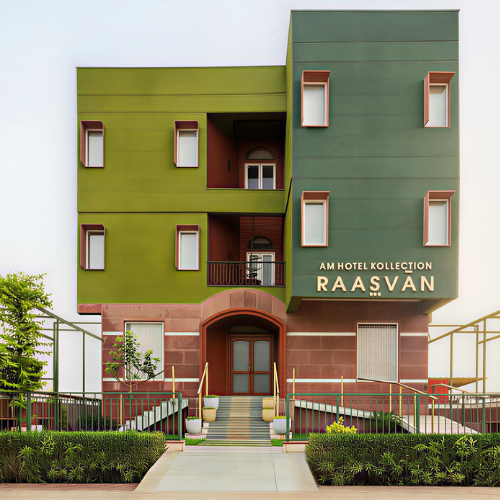
For travelers looking for a refined yet peaceful place to stay near Mathura and Vrindavan temples, Raasvan, Vrindavan offers a stay that aligns naturally with the spiritual rhythm of Braj Bhoomi.
Located in Vrindavan, Raasvan is designed for guests who value calm and comfort after a day of temple visits. The boutique retreat features cozy rooms and artistically designed suites that balance modern comfort with cultural warmth. The overall atmosphere is quiet, respectful, and suited to spiritual travel.
As part of AM Hotel Kollection, Raasvan follows a philosophy of curated stays where personal care and thoughtful details take priority over cold or impersonal service. This approach makes it a natural choice for pilgrims and mindful travelers.
Guest Privileges at Raasvan include
-
Complimentary early check-in and late check-out, subject to availability, helpful for temple darshan schedules
-
Welcome drink on arrival
-
Fifteen percent savings at Raas, the in-house vegetarian restaurant inspired by Vrindavan’s local flavors
-
Free Wi Fi, dedicated parking, and power backup for uninterrupted comfort
The hotel’s close location to major temples allows guests to return between visits, rest comfortably, and continue their journey without rushing. Raasvan recognizes that spiritual travel needs both devotion and rest in equal balance.
To learn more about this stay experience, visit Raasvan at AM Hotel Kollection.
FAQs
1. What makes Mathura different from other ancient cities in India?
Mathura is different because it is not only historically essential but also part of daily religious life even today. It is known as the birthplace of Lord Krishna, and its temples, ghats, and rituals are still actively followed by locals and pilgrims. Unlike many ancient cities, Mathura feels lived in, not preserved only for tourism.
2. Should I visit both Mathura and Vrindavan, or is one enough?
It is best to visit both. Mathura focuses on Krishna’s birth and early history, while Vrindavan reflects his childhood and devotional life. Visiting only one means missing an essential part of the story. Together, they offer a fuller spiritual and cultural experience.
3. What is the best time to visit Mathura for a comfortable trip?
The best time to visit Mathura is from October to March. During these months, the weather is pleasant and suitable for temple visits, walking, and sightseeing. Summers are very hot, and monsoon months can limit outdoor plans. Festivals like Janmashtami are meaningful but very crowded.
4. Is Mathura safe for tourists and first-time visitors?
Yes, Mathura is generally safe for tourists, especially during the day and around the main temple areas. Like any pilgrimage town, it gets crowded during festivals and weekends. Visitors should dress modestly, keep personal belongings secure, and plan visits during daylight hours for comfort.
5. Where is the best place to stay when visiting Mathura and Vrindavan?
Many travelers prefer staying in Vrindavan for a quieter and more relaxed experience while still being close to Mathura. A calm stay like Raasvan, Vrindavan offers easy access to major temples, a peaceful atmosphere, and facilities suited for spiritual travelers who want comfort along with devotion.
